 >
>


Product overview: MC74VHC1G14DBVT1G series
The MC74VHC1G14DBVT1G is a high-speed CMOS single inverter integrating Schmitt-trigger input technology, engineered for precise logic signal conditioning in space-constrained digital environments. Core to its design is the Schmitt-trigger mechanism, which introduces distinct threshold levels for logic high and low, thereby suppressing erratic switching caused by input noise or slow signal transitions. This architecture ensures that even in systems where the input waveform is degraded—such as those affected by parasitic capacitance, signal cross-talk, or EMI—the output remains clean and unambiguous, supporting consistent downstream logic operation.
Electrically, the device accommodates a broad supply voltage range, typically spanning 2 V to 5.5 V, facilitating seamless integration across mixed-voltage platforms while maintaining low propagation delay and high noise margins. Its input and output characteristics are optimized for minimal static power consumption, rendering it particularly effective in battery-operated designs where efficient switching and extended lifetimes are required. The low-voltage compatibility further enhances its utility in interfacing legacy TTL logic levels with modern CMOS systems, a frequent requirement in incremental upgrades or mixed-technology circuit boards.
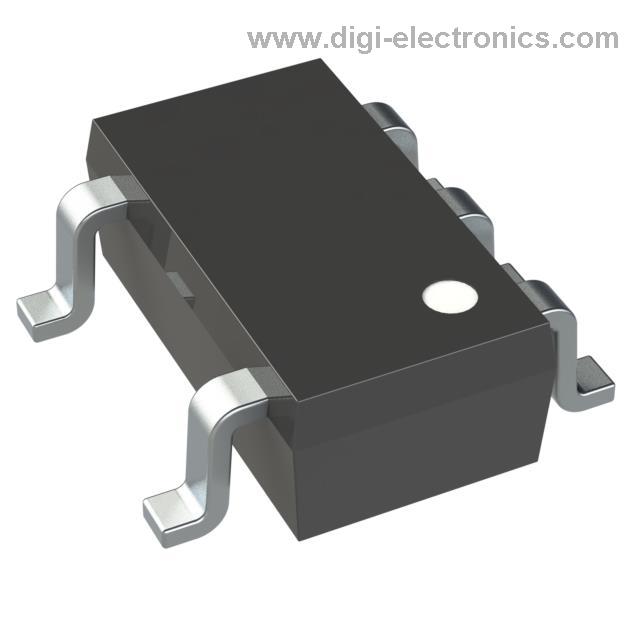
From a physical implementation standpoint, the miniature DBV (SOT-23) package enables high-density PCB layouts, contributing both to footprint reduction and improved signal integrity through short interconnect paths. This form factor is advantageous in applications such as portable consumer electronics, industrial control modules, and densely-packed sensor arrays. Practical deployment reveals that the Schmitt-trigger input reliably eliminates false triggering in scenarios with slow signal edges, frequently encountered adjacent to analog front ends or mechanical switching interfaces. The inverter’s robust input hysteresis directly mitigates risks of metastability, reducing design complexity in timing-critical logic networks.
A noteworthy distinction of the MC74VHC1G14DBVT1G lies in its balanced compromise between speed and immunity. Unlike standard inverters, the incorporation of Schmitt-trigger inputs allows for aggressive clocking rates in environments with marginal signal quality, bypassing the need for additional padding or external signal conditioning. This leads to reduced BOM costs and simplified design iterations, aiding rapid prototyping and field updates. The subtle design flexibility—allowing use as both a signal reshaper or a basic logic inverter—makes this IC a preferred choice for engineers seeking robust solutions in unpredictable or noisy digital ecosystems.
Overall, integrating the MC74VHC1G14DBVT1G enhances logic network reliability and design versatility, supporting both high-performance and resource-constrained applications.
Functional characteristics and circuit behavior of MC74VHC1G14DBVT1G
The MC74VHC1G14DBVT1G is engineered around a three-stage buffer topology, with each successive stage amplifying signal robustness before delivering a final, buffered output. This architecture fortifies signal integrity by attenuating spurious disturbances and providing consistently sharp output transitions. Critical to its functional core is the embedded Schmitt-trigger mechanism at the input, introducing well-defined hysteresis. Hysteresis not only suppresses susceptibility to input noise and voltage ripples but also enforces decisive logic level switching—characteristics essential in environments prone to EMI or with slow signal edges. This characteristic markedly reduces the risk of multiple output transitions during marginal input conditions, which is vital in clock and timing signal applications.
Input threshold versatility is reflected in the device variants: MC74VHC1G14 adheres to CMOS logic levels, while MC74VHC1GT14 aligns with TTL thresholds. This design consideration provides a seamless bridge in mixed-logic systems, facilitating direct interfacing without additional adaptation circuitry. Replacement of external level shifters translates to reduced board complexity, lower BOM counts, and minimized propagation delay—a key consideration in high-performance, space-constrained or cost-sensitive designs.
Robust input structures extend absolute maximum ratings up to 5.5 V regardless of the supplied Vcc, enabling compatibility with both traditional 5 V logic signals and emerging 3 V environments. This wide-voltage tolerance simplifies migration strategies in legacy equipment upgrades and mixed-voltage backplanes, minimizing risk during prototyping and system bring-up. In practice, leveraging this characteristic streamlines compatibility testing and enhances design flexibility for future system revisions.
The device’s output protection schemes are equally sophisticated. Output circuits integrate features to manage voltage differentials and safeguard against unconventional power scenarios, such as battery backup or hot swapping. Protection from latch-up and transient-induced overstress ensures reliable operation during board insertion or replacement under power, preventing system faults and enabling true plug-and-play flexibility. This is particularly valuable in modular systems or maintenance-heavy deployments, where live insertion may be routine.
Incorporating such a device into digital logic paths amplifies system robustness, particularly where signal fidelity and inter-logic compatibility are priorities. Reliable experience with this architecture affirms its utility in applications ranging from clock tree buffering to noise-immune user input detection. Notably, leveraging Schmitt-trigger inputs within feedback-regulated systems or sensor interfaces has demonstrated significant reductions in spurious switching events and enhanced system EMC performance, reducing the need for external filtering.
An important insight in practical deployments is the dual advantage of performance optimization and risk mitigation the MC74VHC1G14DBVT1G offers. Through balanced circuit topology and versatile I/O design, it unifies signal cleanliness, power-domain flexibility, and operational durability within a compact footprint. For engineering teams seeking to enhance legacy interfaces or ensure reliable signal translation in modern digital systems, this device delivers a well-integrated, future-proof solution.
Key electrical specifications of MC74VHC1G14DBVT1G
The MC74VHC1G14DBVT1G sets itself apart through robust electrical performance and broad system adaptability. Operating reliably from 2.0 V to 5.5 V, it accommodates diverse supply voltages found in mixed-logic environments, streamlining integration across both legacy 5 V and modern 3 V systems. The device’s input and output tolerance up to 5.5 V eliminates the need for excessive protection circuitry when interfacing with higher voltage domains, which is vital in subsystem designs where supply sequencing or voltage rails are routinely dynamic.
At the device core, propagation delay is minimized to 4.0 ns (typical at 5 V), supporting high-frequency signal transitions without sacrificing timing margins. This speed, coupled with the Schmitt-trigger configuration, ensures clean signal conditioning by providing defined hysteresis, which proves invaluable in noisy or slow-rising signal environments—frequently encountered on crowded PCBs or in automotive harnesses. This capability mitigates false triggering and enhances immunity to supply noise, observably improving signal robustness during signal integrity validation.
The MC74VHC1G14DBVT1G’s output drive flexibility, sourcing or sinking up to 8 mA at 3.0 V, enables the direct actuation of moderate loads, such as indicator LEDs or interface lines, without buffer stages. This feature simplifies circuit architecture and reduces BOM complexity, especially in distributed logic scenarios.
The inclusion of the I_OFF function underlines forward-thinking design for partial power-down applications. When power is removed, the device maintains high-impedance outputs, preventing unwanted backdrive or leakage through the I/O, a critical concern in hot-swap or multiplexed systems where rail isolation and zero-leakage states are expected. This aspect greatly eases implementation in modular designs or applications employing subsystem sleep states, as often required for stringent low-power targets.
With device complexity controlled at under 100 FETs, MC74VHC1G14DBVT1G offers a compelling balance between functionality and silicon area. This efficiency enables use in space-constrained layouts, such as dense automotive control modules, handheld equipment, or tightly-packed industrial control boards. In the automotive sector, AEC-Q100 qualification provides assurance for deployment in environments with rigorous reliability and temperature requirements, allowing for seamless adoption in harsh application domains.
A key insight emerges when considering deployment in scalable, versioned hardware or platforms transitioning between logic standards. The MC74VHC1G14DBVT1G serves as a unifying drop-in for design iterations, supporting phased upgrades without layout changes or peripheral modifications. Overall, its electrical versatility, resilience to environmental variances, and design-for-integration philosophy position this device as a foundational element in agile hardware systems.
Package options and mechanical details for MC74VHC1G14DBVT1G
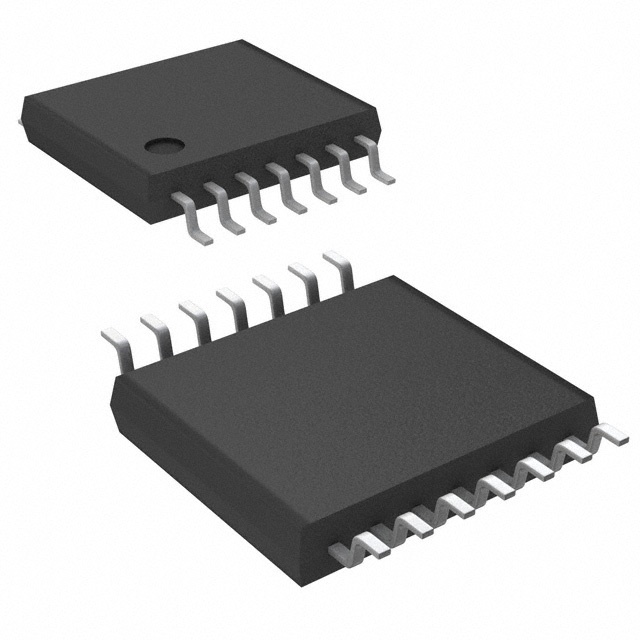
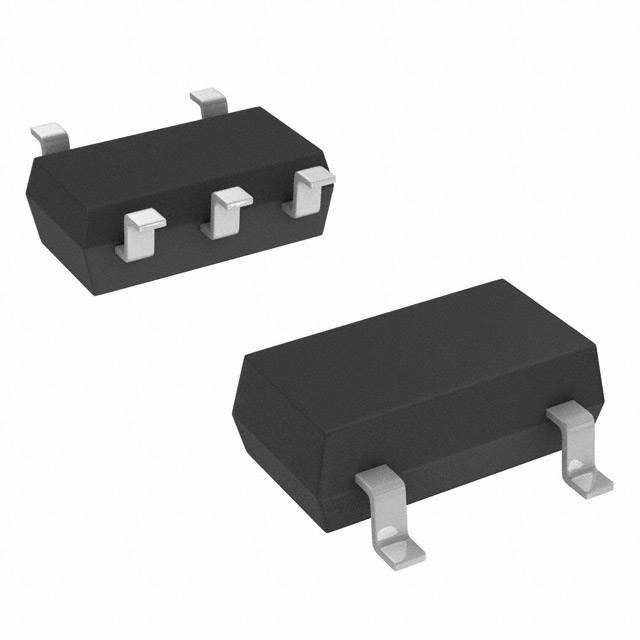
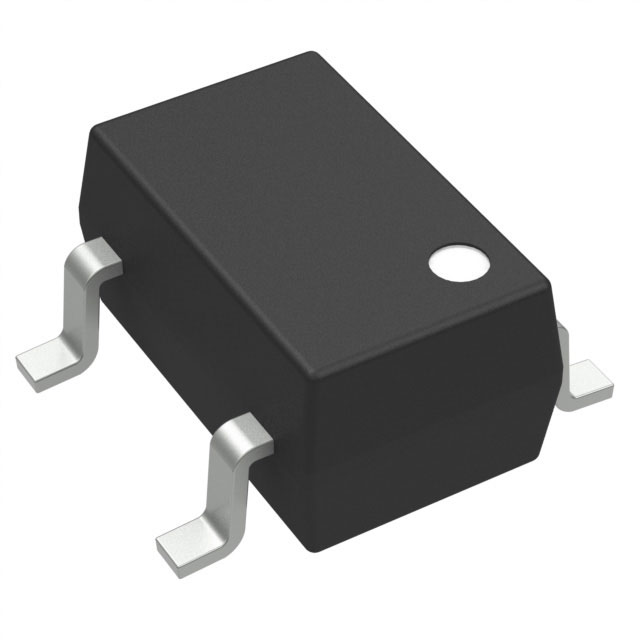
The MC74VHC1G14DBVT1G logic IC demonstrates adaptability for diverse PCB integration requirements with its array of industry-standard packaging formats: SC-74A, SC-88A, TSOP-5, SOT-953, and UDFN6. These package choices represent incremental advances in miniaturization and thermal management, targeting both space-constrained assemblies and designs demanding mechanical robustness. The underlying approach to package design emphasizes the precision of dimensional specifications, encompassing parameters such as package outline tolerances, pad pitch, and coplanarity—all underpinned by ASME Y14.5 standards. These measures ensure seamless interoperability in global manufacturing environments and compatibility with automated assembly processes.
Each package variant provides detailed soldering footprint recommendations that directly address solder joint reliability and yield optimization. For instance, the ultra-small SOT-953 and UDFN6 formats regularly excel in high-density layouts, particularly where signal integrity and reduced parasitics are prioritized. Conversely, TSOP-5’s slightly larger dimensions favor more accessible hand or reflow soldering during prototyping and enable greater latitude in trace routing, evident when integrating the component into multi-layer boards.
The technical documentation is structured to offer precise mounting patterns, which reduce the risk of misalignment and cold solder joints during reflow. These patterns are calibrated for both leaded and leadless packages, with focus on thermal dissipation and mechanical stability. Marking diagrams are carefully standardized to streamline component recognition and inventory management, a frequent necessity in environments with rapid turnover and stringent traceability requirements.
Empirical evidence from surface mounting MC74VHC1G14DBVT1G in UDFN6 configurations suggests particular attention should be paid to PCB finish and stencil aperture optimization, as variations can materially influence solder wetting and void formation. Experience in high-volume runs indicates that controlled reflow profiles—tuned to package-specific thermal inertia—can mitigate common failures like tombstoning, especially for miniature leadless packages.
A crucial insight emerges from repeated deployment across varied board topologies: The modularity of package selection enables engineers to address trade-offs between mechanical stress tolerance, electromagnetic interference proximity, and assembly cost without substantial alteration to signal integrity or application reliability. This layer of flexibility enhances design iterations and accelerates time-to-market, reinforcing a practical viewpoint—the deliberate correlation between package geometry optimization and process yield is a linchpin in competitive PCB development.
Recommended operating conditions for MC74VHC1G14DBVT1G
Optimal use of the MC74VHC1G14DBVT1G Schmitt-trigger inverter hinges on strict adherence to specified supply voltage (Vcc) and ambient temperature ranges—commonly Vcc of 2–5.5 V and temperatures between –55°C and 125°C. Derating device performance outside these intervals risks unpredictable logic thresholds, increased propagation delays, and diminished noise immunity. The underlying CMOS architecture is finely tuned to these windowed parameters, leveraging low quiescent current and fast transitions, yet outside the prescribed bounds, leakage currents or latchup susceptibility may suddenly escalate and compromise downstream logic.
Electrostatic discharge (ESD) robustness is delineated by compliance with ANSI/ESDA/JEDEC JS-001-2017 for Human Body Model (HBM) and EIA/JESD22-C101-F for Charged Device Model (CDM), providing standardized assurance of resilience during assembly and routine handling. Despite this, in applications where board-level transients or cable-plugging events are anticipated, integrating additional protections such as series resistors or TVS diodes at I/O interfaces is prudent to further tamp ESD energy and prevent inadvertent overstress beyond datasheet limits.
Variation in load capacitance and switching frequency exerts direct influence on dynamic power consumption and propagation delay. Designs targeting frequencies approaching the upper toggle rates specified in the datasheet must account for increased capacitive drive requirements, as higher C_load stretches propagation times and raises the risk of output ringing, especially across lengthy PCB traces. Proper decoupling—such as optimally placed 0.1 μF ceramic capacitors—suppresses Vcc dips during high edge rates, a measure often underestimated during prototyping.
The integration of this device within diverse system topologies further emphasizes the importance of scrutinizing interface logic levels, particularly during mixed-voltage integration or when driving high-fanout gates. Signal integrity can degrade through accumulated delays or spurious oscillations if trace terminations or ground returns are inadequately engineered. Analyzing overshoot, undershoot, and ground bounce during breadboarding can reveal latent timing margin erosions that might otherwise surface only under thermal or voltage extremes.
Maximizing reliability and achieving robust long-term performance with the MC74VHC1G14DBVT1G demands not only respect for absolute maximum parameters but also a nuanced appreciation of system-level electrical interactions. Deeper experience consistently confirms that subtle misapplication of supply, load, or thermal constraints rarely manifests as immediate failure, but as gradual parameter drift or flakiness which can confound post-release troubleshooting. In tightly constrained embedded or automotive contexts, budgeting for thermal rise, validating power integrity layout, and simulating worst-case jitter collectively underpin a design that endures real-world rigors.
Attentive alignment of application constraints with device characteristics is ultimately integral to sustaining signal fidelity, minimizing lifecycle support costs, and delivering robust digital infrastructure—objectives increasingly critical as operating margins shrink and integration densities grow.
Application scenarios and engineering considerations for MC74VHC1G14DBVT1G
The MC74VHC1G14DBVT1G leverages a Schmitt-trigger architecture to deliver resilient signal conditioning in digital circuits. At its core, the device’s threshold hysteresis serves to filter out spurious transitions, a significant advantage when processing signals subject to noise or uncontrolled rise and fall times. This mechanism is especially effective when interfacing with mechanical switches or sensors where signal bounce and electromagnetic interference frequently degrade logic integrity.
In clock generation and timing distribution networks, the MC74VHC1G14DBVT1G’s ability to reshape and square up asynchronous or slowly ramping inputs directly enhances system timing reliability and reduces the likelihood of metastability in downstream components. The device demonstrates consistent edge transitions, a property that translates into improved duty cycle symmetry for clock signals driving flip-flops or state machines. This feature streamlines PCB layout by minimizing the need for supplementary filtering components, which reduces overall design complexity.
When bridging between logic families or adapting input levels, the input protection circuitry supports reliable interfacing even under partial or fluctuating power conditions. Its compatibility with battery-backed domains and hot-swappable designs is rooted in its tolerance for input voltages exceeding supply rails, safeguarding both the IC and connected logic against destructive transients. This robustness can be especially critical in automotive ECUs and industrial modules where power sequencing or system reconfiguration is routine.
Selecting the MC74VHC1G14DBVT1G for such scenarios requires nuanced assessment of hysteresis width against expected input noise amplitude. A wider hysteresis window increases noise immunity but may affect sensing accuracy if input signals hover near threshold levels. Output drive capacity also influences system design; coupling the device with high-capacitance loads or long trace lengths should prompt verification of rise/fall times and VOH/VOL performance under worst-case current demand. Empirical validation has shown that proper output loading mitigates timing mismatches and prevents inadvertent logic level degradation across multi-board assemblies.
In advanced interface applications, deploying the MC74VHC1G14DBVT1G to buffer bidirectional communication lines or level-shift asynchronous signals enables robust protocol integration without the need for additional external clamping or filtering circuitry. The device’s intrinsic immunity to cross-talk and ground bounce under fast digital transitions supports error-free operation in sensor-rich environments and multi-voltage platforms. This architecture, when applied in modular systems, delivers tangible reliability improvements and elevates noise performance beyond what conventional logic gates offer.
A notable insight is that strategic use of Schmitt-trigger technology, such as in the MC74VHC1G14DBVT1G, not only enhances signal discrimination but also expands tolerance margins for wide temperature range operation and long-term system stability. These characteristics underpin the device’s suitability for deployment in mission-critical applications, where signal clarity and operational continuity are paramount.
Environmental compliance and reliability of MC74VHC1G14DBVT1G
The MC74VHC1G14DBVT1G is engineered for compatibility with modern environmental regulations, ensuring adherence to RoHS standards and the elimination of hazardous substances such as lead and halogens from the composition. This design principle significantly reduces the ecological footprint throughout the product life cycle, supporting sustainable supply chains and compliance with international import requirements. During component selection and procurement, traceable documentation—including material composition and environmental certifications—expedites third-party audits and substantiates compliance credentials, which is particularly critical for mass production in regulated markets.
Reliability extends beyond material compliance to encompass operational robustness. The automotive-grade variants of this device conform to AEC-Q100 standards and complete PPAP processes, reflecting a rigorous qualification framework. These include stress tests for temperature cycling, humidity exposure, and voltage fluctuations, simulating extended field operation in automotive and industrial electronics. The AEC-Q100 qualification is an established benchmark; its inclusion assures predictable failure rates and reliable performance even under frequent thermal shocks and high-humidity environments typical of under-hood and factory conditions.
Mechanically, the device is housed in a robust SOT-353 package. This low-profile construction not only eases automated handling and surface-mount assembly but also facilitates reliable soldering processes mandated by RoHS—where lead-free solders demand tighter reflow windows. Empirical experience demonstrates that devices in this package exhibit consistent joint reliability on both standard and high-temperature PCBs, minimizing process variability and long-term degradation risks.
Operational parameters are specified across a broad temperature and voltage range, ensuring logic consistency down to logic threshold margins even as ambient conditions fluctuate. In applications ranging from automotive to industrial controls and consumer appliances, this tolerance is vital for circuits exposed to unpredictable conditions, such as abrupt thermal anomalies or sustained moisture ingress. Notably, designers often leverage the device’s Schmitt-trigger inputs for robust noise immunity, enabling reliable signal processing in electrically harsh and electromagnetically noisy environments.
These product characteristics underscore a systems-level approach to compliance and reliability, where component trustworthiness is not isolated but integral to meeting broader environmental and operational specifications. Prioritizing such components accelerates time-to-market for platforms that demand certification readiness, sustainable operation, and enduring field reliability. The convergence of strict hazardous substance controls, process-proven qualification, and resilient electrical design positions the MC74VHC1G14DBVT1G as an optimal choice in both automotive and industrial system architectures, where compliance and reliability are imperative rather than optional.
Potential equivalent/replacement models for MC74VHC1G14DBVT1G
Evaluating potential replacements for the MC74VHC1G14DBVT1G Schmitt-trigger inverter necessitates a systematically layered approach, beginning with a close examination of its core functional parameters. The device’s voltage and input threshold characteristics, fundamental for logic interoperability, anchor its suitability. Within the MC74VHC1G14 and MC74VHC1GT14 device families, variants exist that share the same Schmitt-trigger topology but diverge in packaging form factors and input specifications—some tailored for tight tolerance CMOS levels, others designed for broader TTL highs and lows. Factorization should be driven by logic threshold match and switching profile requirements, ensuring that alternate models maintain glitch immunity and noise rejection comparable to the original.
Pinout congruence, gate drive capabilities, and propagation delay must be scrutinized against application-level benchmarks. Electrical replacements within onsemi’s single-gate offerings often present similar footprints; however, differences in input capacitance, output rise/fall times, or supply voltage ranges can critically affect timing margins and downstream logic behavior. Specification sheets must be meticulously cross-examined—particularly for parameters such as V_IL/V_IH levels and drive currents under various loading scenarios. Experience reveals that, in mixed-voltage environments or when intermediate logic stages are involved, mismatches in hysteresis window or output impedance can lead to intermittent faults that are elusive during prototyping.
Environmental tolerances also inform replacement strategy. Devices subjected to hostile operating conditions, such as high ambient temperature or humidity, require alternatives validated for extended temperature ranges, enhanced ESD protection, and robust moisture sensibility ratings. Mechanical compliance, such as adherence to JEDEC outline or MSL rating, reinforces the choice of device, especially in automated assembly contexts.
Direct replacement is most effective when dimensional equivalence and electrical compliance are strictly enforced, facilitating seamless board-level integration. In practice, problems frequently arise when footprint substitutions overlook subtle variances in paddle size or exposed pad connection, resulting in thermal bottlenecks or incomplete logic interfacing. Alternative selection should always be substantiated by empirical data from bench-level substitution, supporting predictable and repeatable circuit behavior.
An optimized engineering workflow harnesses parametric search engines with targeted filtering for hysteresis, supply voltage, and package. Using this methodology, the MC74VHC1GT14 series emerges as a versatile solution, balancing CMOS-grade performance and minimal transition errors. Strategic preference is often given to models offering tighter hysteresis control and lower input leakage, characteristics which contribute to signal integrity in high-noise digital substrates.
In summary, successful replacement extends beyond simplistic part number matching, requiring technical validation of logic thresholds, output capability, environmental resilience, and assembly compatibility. Multilayered assessment, reinforced by prototype-level verification, optimizes interoperability while streamlining supply chain adaptability. Selecting superior substitutes hinges on anticipating subtle behavioral nuances and leveraging device features to fortify system reliability.
Conclusion
The MC74VHC1G14DBVT1G represents an advanced logic inversion solution engineered for demanding digital design environments. At the core, its implementation of High-Speed CMOS technology achieves propagation delays on the scale of nanoseconds, facilitating rapid signal processing essential in high-frequency control and data routing circuits. This intrinsic speed is coupled with Schmitt-triggered inputs, a mechanism designed to suppress input voltage transients and noise-induced fluctuations. As a result, the device provides stable logic thresholds, minimizing the risk of false triggering in electrically noisy systems and safeguarding functional integrity in mixed-signal and industrial contexts.
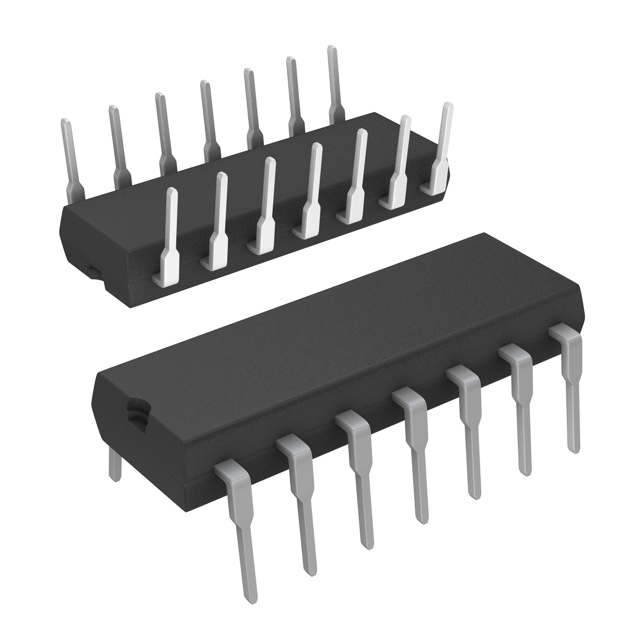
Interfacing flexibility further strengthens its engineering value. The MC74VHC1G14DBVT1G is compatible with both TTL and CMOS logic levels, simplifying integration into heterogeneous system architectures. This dual compatibility streamlines processes during system upgrades or board redesigns by mitigating level-matching concerns, thus reducing development cycles and lowering the risk profile during migration from legacy to modern platforms. The availability of multiple compact and leaded package options enables optimized PCB real estate utilization and supports automated assembly, directly impacting manufacturability and assembly yield in high-volume lines.
From an environmental and electrical protection perspective, the device integrates internal clamp diodes and supports input and output overvoltage tolerances, providing enhanced resilience against ESD events and inadvertent connection scenarios. These protections are critical in field-deployed systems subject to unpredictable power cycling or hot-swapping operations. The compliance with industry environmental standards, including RoHS, further positions it as a future-proof component suitable for both global distribution and green manufacturing initiatives.
In application, the device's switching performance supports use cases ranging from core logic signal cleaning to debouncing and edge shaping in timing-sensitive circuits. Its robustness has proven advantageous in signal conditioning roles within control interfaces, sensor readout chains, and digital communication lines, where system stability is a non-negotiable metric.
Closer analysis of supply chain longevity indicates the value in selecting devices that not only meet immediate specifications but align with multi-generation support strategies. The MC74VHC1G14DBVT1G, with its proven reliability and broad qualification data, fits well into platforms requiring long-term component availability and minimal field service intervention. An often-underestimated advantage is found in its legacy replacement capability—engineers consistently report reduced integration risk and accelerated time-to-qualification when substituting this logic inverter for aging equivalents, owing to its electrical parameter stability and documentation completeness.
Considered holistically, the MC74VHC1G14DBVT1G’s balance of speed, noise immunity, interfacing agility, and ruggedness addresses key pain points encountered during both initial design and ongoing product lifecycle phases. Its deployment in both cutting-edge digital systems and the upgrade of entrenched infrastructure demonstrates a versatility that extends beyond specification sheets, making it a strategic asset in systematic architecture planning.