>
>


Introduction to the 93AA46/SN Microwire Serial EEPROM
The 93AA46/SN Microwire Serial EEPROM exemplifies a mature approach to nonvolatile memory integration in embedded architectures. Leveraging Microwire’s three-wire serial interface, this device achieves a streamlined communication protocol that minimizes pin count and system wiring complexity, directly aligning with space-constrained PCB layouts and low-I/O microcontroller platforms. Its architecture incorporates essential features such as write protection and sequential read functionality, supporting both byte and multi-byte operations while effectively mitigating bus contention risks in multi-device environments.
At the core, the 93AA46/SN employs an EEPROM cell structure designed for high endurance, reliably sustaining over one million erase/write cycles without performance degradation. This endurance is complemented by data retention capabilities spanning a minimum of 200 years, satisfying regulatory and commercial standards for long-term field deployment. Power efficiency remains another critical factor, as idle and active consumption metrics enable direct operation from standard embedded rails, facilitating integration into battery-powered or power-sensitive systems without elaborate external regulation.
In practical control applications, designers often utilize the 93AA46/SN for parameter caching, calibration coefficients, and identification tag storage. The atomicity of write operations and the deterministic erase/program timings simplify firmware development, reducing the need for complex error handling routines. Its compatibility with SPI timing, due to Microwire similarities, provides flexibility for hardware abstraction, especially when peripheral resource limitations dictate the use of shared buses. Signal integrity is further supported by input noise filters, which minimize the probability of inadvertent writes during transient system events.
Robustness in harsh environments is accentuated by the 93AA46/SN’s tolerance of fluctuating Vcc and broad operating temperature ranges. Engineers leveraging this EEPROM for industrial control nodes or field calibration modules have observed consistent reliability, even under variable supply conditions and ambient stress. Such resilience, coupled with a straightforward pinout and rational command set, supports rapid bring-up, debugging, and iterative prototyping—a tangible productivity factor in time-constrained development cycles.
Recent integration practices emphasize the value of matching EEPROM sectorization with the underlying firmware update protocols. By aligning logical data partitioning with the memory’s hardware organization, system designers achieve faster update cycles and lower wear, optimizing the utilization of available storage for evolving calibration and configuration demands. Systems employing distributed nonvolatile state also benefit from the EEPROM’s fast accessibility, which reduces synchronization latencies across multiple control elements.
Critical evaluation suggests the 93AA46/SN’s primary advantage lies not only in endurance or electrical robustness but in its ability to facilitate concise, maintainable hardware-software boundaries for nonvolatile storage. This decoupling of state retention from main MCU resources enables simplified error isolation and upgrade pathways, essential for reliable field maintenance and long-term scalability. When integrated thoughtfully into the system architecture, the 93AA46/SN not only meets basic specification requirements but actively contributes to operational predictability and modularity, ensuring longevity and clarity in both design documentation and deployed assets.
Product Overview: 93AA46/SN Essential Features and Technology
The 93AA46/SN serial EEPROM integrates essential non-volatile memory in a compact, robust package for embedded applications requiring reliable, low-power data storage. Its 1 Kbit density, implemented with CMOS fabrication, yields substantial efficiency—read currents as low as 70 μA at 1.8 V and ultra-low standby values down to 2 μA. This current profile directly translates into longer operational life in battery-restricted designs, such as handheld instrumentation, biometric authentication tokens, and compact wireless devices, where every microampere drawn influences usability and power budgeting strategies.
A key architectural distinction lies in its three-wire Microwire-compatible interface. This configuration streamlines system integration, especially in host microcontrollers with limited I/O resources, and reduces the risk of bus contention in multi-component environments. Direct wiring to serial buses without chip select multiplexing remains feasible, minimizing peripheral glue logic and facilitating both rapid prototyping and production scaling. The EEPROM’s organization flexibility—configured by the ORG pin for x8 or x16 word widths—enables developers to optimize data packing and address mapping without resorting to extra hardware or alternative software routines.
Embedded within the device are self-timed erase and write cycles, referencing the on-chip clock to autonomously control and complete memory programming transactions. This feature eliminates the need for human-calibrated software delays, raising throughput and reducing programming code complexity. Coupled with atomic power-on/off data protection, the architecture shields against inadvertent writes and bit corruption during uncertain supply transitions. This level of assurance is especially critical in sensor nodes or industrial monitors, where abrupt power loss can compromise data integrity, requiring robust recovery or redundant update strategies.
The provision of status signaling during memory operations enhances system visibility, allowing supervisory logic to synchronize efficiently—particularly when queuing serial tasks or coordinating concurrent resource access on shared buses. Sequential read operations further amplify transfer efficiency for bulk data streaming or lookup tables, leading to fewer command cycles and diminished communication overhead.
With endurance parameters specified at 1,000,000 erase/write cycles per byte and data retention exceeding 200 years, the 93AA46/SN is positioned for use in logging, configuration management, and device parameter storage. These characteristics enable reliable lifecycle management in applications ranging from industrial PLC modules to IoT edge nodes where persistent, frequent updates occur under varying environmental conditions. The industrial-grade temperature support (-40°C to +85°C) expands its applicability to harsh environments, such as automotive subsystems or factory automation, minimizing degradation under thermal cycling.
In practical engineering deployments, careful attention to decoupling proximity and bus termination mitigates EMC vulnerabilities, preserving data integrity against coupled transients. Pin compatibility with established 8-pin SOIC footprints ensures easy migration from legacy systems. System-level validation repeatedly demonstrates that the self-timed internal sequencing simplifies firmware update management, reducing flash code size and overall test cycles. Given these attributes, the 93AA46/SN stands as a pragmatic choice for compact yet demanding embedded applications requiring resilient, flexible serial EEPROM capability embedded seamlessly within constrained designs.
Memory Organization and Configuration Flexibility of the 93AA46/SN
The 93AA46/SN introduces a significant degree of adaptability through its configurable memory architecture, centered on the state of the ORG pin. At a circuit level, the ORG pin acts as a mode selector, toggling between byte-oriented (128 x 8 bits) and word-oriented (64 x 16 bits) memory arrays. Connecting ORG to ground activates the byte-wide mode, supporting fine-grained data transactions well-suited for parameter storage or ASCII-based interfacing, where byte-level manipulation is fundamental. In contrast, linking ORG to Vcc shifts the organization to word mode, facilitating 16-bit access. This aligns efficiently with architectures prioritizing throughput, such as those interfacing with microcontrollers operating on 16-bit data buses or where multi-byte configuration registers are prevalent.
At the firmware abstraction layer, this configurability allows for direct mapping between variable size and storage format, minimizing overhead in software routines responsible for serialization and deserialization. Developers exploit the chosen organization to match the predominant payload size, optimizing not only access timing but also reducing firmware complexity related to data alignment and masking. The decision between modes is commonly dictated by the system’s protocol stack or the typical transaction width in the target application—for example, switching to word mode in control systems that pack multiple flags or analog-to-digital conversion results within 16-bit registers.
A critical aspect, often encountered during system integration at elevated SPI frequencies (above 1 MHz), is the handling of the ORG pin's electrical state. Leaving this pin floating induces indeterminate logic levels, potentially causing mode glitching and subsequent data corruption, especially when timing margins are compressed. Signal integrity mandates that the ORG pin must be unambiguously asserted to either ground or Vcc, a requirement that becomes non-negotiable as the clock rate increases and signal sampling windows narrow.
Practical deployment reveals additional nuances. In environments where both byte and word operations are variably required, physically strapping the ORG pin is optimal for stability, rather than multiplexing it through GPIOs, which can invite susceptibility to noise and accidental toggling. Furthermore, leveraging the mode flexibility can simplify PCB layouts and firmware modularity, as the physical device can serve different roles across multiple projects or evolving requirements, simply through a configuration change.
This level of memory organization flexibility, uncommon in serial EEPROMs of this class, streamlines integration for designers prioritizing code efficiency and reliability. By abstracting the configuration as a hardware pin rather than firmware command, the device mitigates in-field software misconfiguration risks and provides a robust foundation for deterministic data storage. Such architectural choices reflect a design philosophy attuned to both performance and system-level reliability—a synergy that should inform broader component selection strategies in embedded systems.
Operational Principles and Data Integrity in the 93AA46/SN
Microwire serial communication underpins both control logic and data transport for the 93AA46/SN EEPROM. At its core, protocol-level signaling orchestrates precise device engagements: the Start condition forms when both Chip Select (CS) and Data In (DI) transition high on the clock's rising edge, a mechanism guaranteeing deterministic device wake-up and mitigating spurious activation under line noise. The discipline imposed by strict signal qualification necessitates careful board-level routing and signal timing analysis, especially in dense bus environments where reflection and skew can degrade edge detection.
Upon Start, instructions, addresses, and data payloads are clocked in, sequentially latched on each positive transition. This explicit separation of cycles for opcodes and payload sharply reduces the risk of contention and ambiguity. For output, the DO pin’s tri-state architecture is a cornerstone of bus integrity—avoiding floating or actively driven lines when not reading mitigates crosstalk and allows multiple devices to share a single bus without introducing parasitics. This feature is pivotal in matrixed or multipoint topologies, enabling handoff between read/write cycles with no risk of bus ‘fight’, a common hazard in large embedded systems.
On the physical layer, robust data retention mechanisms are deployed. During power events, an internal comparator inhibits write and erase functions below 1.4V, isolating memory from transients that might corrupt contents. This threshold-based gating exemplifies fail-safe design: only when Vcc stability is confirmed does programming unlock. Further, the mandatory invocation of EWEN before any modification and EWDS to subsequently lock down memory updates reflects a dual-stage software safeguard. This layer abstracts physical write protection, permitting host logic to enforce policy—a fundamental for security and anti-tamper schemes.
Programming and erasure operations are entirely self-timed, offloading process complexity from the host processor. Once initiated, internal state machines drive cycling and verify completion; the host interrogates busy/ready status via DO, allowing tight polling loops or asynchronous event handling. Such architectural isolation yields compact firmware and predictable system response, evident in applications demanding deterministic update latencies, like real-time configuration or calibration storage.
Sequential read mode further elevates throughput in bulk transfer scenarios. Memory can stream multiple bytes following a single address latch, reducing overhead and maximizing interface bandwidth. This efficiency shines in tasks like rapid provisioning, parameter dumps, or state archiving, where speed and order integrity are crucial. The ability to unroll transactions smoothly not only accelerates host-side microcontroller routines but also simplifies error-checking and recovery logic.
An often-underutilized capacity lies in the bulk erase/write functions (ERAL/WRAL). These allow system architects to reset or initialize entire memory sectors atomically, dramatically reducing spin time when reimaging devices or rolling out common presets. Coupled with protections and bus discipline, the 93AA46/SN presents an optimal solution for embedded systems requiring ruggedized non-volatile storage, tamper resistance, and high I/O concurrency, driving both reliability and design agility.
The interplay of hardware safeguards, precise bus arbitration, and layered protocol sequencing establishes the 93AA46/SN not just as a simple memory device but as a robust data backbone within complex control systems. The device’s integration of protection and efficiency mechanisms enables stable operation across diverse environments. The utility found in structured transaction management, hardware-aware protection, and bulk operations frequently delivers notable improvements in firmware stability and system lifecycle management.
Pin Functions and Hardware Interface for the 93AA46/SN
The 93AA46/SN EEPROM integrates seamlessly into embedded circuit architectures due to its standardized 8-pin SOIC configuration and well-defined hardware protocol. Its physical interface prioritizes both functionality and noise resilience, with a pinout programmed for efficient serial data transfer and bus compatibility.
At the core of device control, the CS (Chip Select) pin acts as the command arbiter. Only when CS transitions high does the device decode commands on the serial bus, making precise timing here pivotal—false toggling induces indeterminate operation or unexpected standby states. Reliable circuit performance mandates that CS remains stable throughout command cycles, especially under rapid polling or in systems with bus contention.
Serial data transfer relies on the tightly coupled CLK (Serial Clock), DI (Data In), and DO (Data Out) pins. The edge-aligned synchronization enabled by CLK ensures coherent instruction and data streaming, with each bit on DI sampled precisely on defined edges. This architecture mitigates hazards in timing-critical environments, particularly when interfacing with high-speed microcontrollers or programmable logic devices. Practical use confirms that oscillatory noise or line reflections on CLK can corrupt data framing, necessitating controlled trace lengths and cautious layout near high-frequency sources.
The DO pin employs tri-state logic to support shared bus topologies. When not asserted, DO reverts to a high-impedance state, preventing conflict with other devices on the serial line. This implicit bus-sharing mechanism streamlines multi-device topologies, though real-world scenarios highlight that improper synchronization (such as overlapping CS windows) can lead to bus contention and data collisions, a risk best mitigated with disciplined software protocol and, where possible, hardware multiplexing.
The ORG (Organization) pin determines internal memory mapping—selectable between 8-bit and 16-bit organization. This pin must be set decisively before initialization, as any ambiguity can lead to word-boundary errors or bit misalignment in both writes and reads. Empirical testing demonstrates increased susceptibility to timing violations if ORG states are unstable at higher clock rates; thus, hardwiring to Vcc or Vss—rather than dynamic routing—delivers optimal reliability in production systems.
Power pins Vcc and Vss define the operating envelope, with stability here directly impacting data integrity and retention, especially during write cycles. Experience shows that undervoltage conditions or rapid voltage droops during memory access can result in indeterminate data states or corruption, underscoring the importance of robust supply decoupling and low-impedance grounding.
Leveraging the 93AA46/SN’s deterministic hardware interface allows for scalable EEPROM deployment in applications such as configuration storage, calibration data retention, or small-footprint nonvolatile registers. Strategic emphasis on timing discipline, trace integrity, and configuration rigor maximizes performance, particularly in electrically noisy or physically dense assemblies. This approach not only enhances baseline functionality but also fortifies overall system robustness, revealing the core advantage of the device’s minimal yet powerful electrical interface.
Electrical Characteristics and Endurance Profile of the 93AA46/SN
Electrical attributes of the 93AA46/SN reflect a deliberate focus on operational integrity and resilience across diverse deployment environments. The Vcc rating supports sustained voltages up to 7.0V, accommodating supply transients common in industrial and automotive electronics without compromising data integrity or device longevity. Its broad storage temperature range—from -65°C to +150°C—enables integration into systems exposed to extreme thermal cycling, including automation cabinets and powertrain modules.
The enhanced ESD rating of 4 kV on every pin ensures tolerance against unpredictable electrostatic events, a critical factor in densely packed system boards and in-field service scenarios. Such immunity minimizes risk during PCB handling, test, and direct contact, safeguarding the EEPROM against latent damage that could otherwise manifest as intermittent failures in mission-critical systems.
Endurance engineering for the 93AA46/SN centers around robust internal cell architecture, supporting no less than one million cycles of programming and erasure per memory location. This capacity for repeated state transitions, coupled with data retention exceeding two centuries, aligns with requirements for maintenance-free operation in persistent sensing nodes, key calibration storage, and logging subsystems. By employing self-timed write/erase routines, where typical word programming completes in approximately 4 ms, and bulk operations average 8–16 ms, the device enables deterministic control over memory access scheduling. This deterministic timing is essential for tightly-coupled control loops, where synchronization with processor I/O and peripheral events optimizes system throughput without incurring unnecessary wait states.
In practical deployment along automated production lines, its predictable cycle patterns simplify task sequencing for inventory tracking and parameter logging, reducing firmware complexity and minimizing uncertainty in worst-case operation delays. In embedded automotive applications, designers have noted how high cycle endurance virtually eliminates the need for maintenance interventions, especially in distributed sensor arrays leveraging periodic write schemes.
A key insight involves the dynamic interplay between endurance and system lifecycle cost. While market literature often highlights theoretical retention periods, real-world integration stresses the importance of cycle efficiency—particularly under constrained energy budgets or where write amplification could arise from asynchronous data sampling. Subtle optimization can be achieved by batching write operations or leveraging data mapping strategies that exploit self-timed cycles to maximize throughput during calibration bursts.
These characteristics position the 93AA46/SN as a reliable foundation for memory-centric control architectures demanding resilience, efficient timing, and predictable failure modes. Its electrical robustness complements long-term field deployment, and its internal timing mechanisms provide a scalable interface for modular firmware design, echoing best practices observed in advanced instrumentation and safety-critical deployments.
Package Options and Physical Specifications for the 93AA46/SN
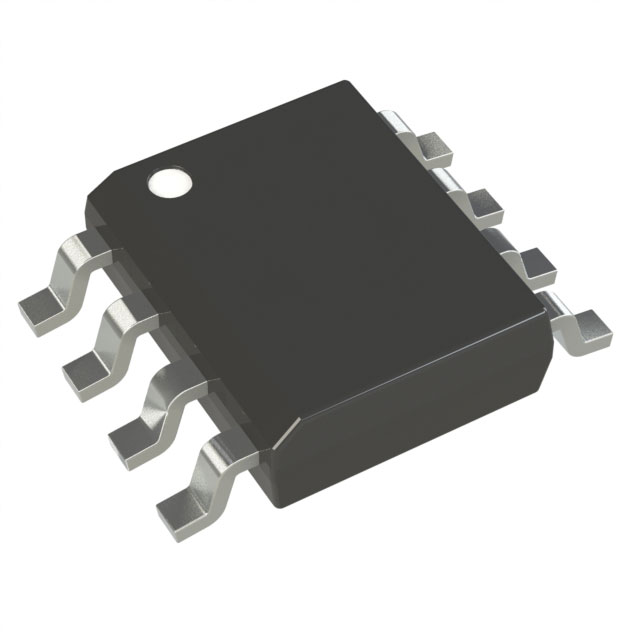
The 93AA46/SN demonstrates flexibility in assembly integration by supporting both through-hole and surface-mount manufacturing paradigms. Its principal variant, designated as the "SN," utilizes a narrow (150 mil) 8-pin SOIC footprint engineered for high-density, automated SMD placement. The package’s reduced width enhances PCB real estate efficiency, while maintaining sufficient lead pitch for reliable solder joint formation and post-solder inspection. This design addresses constraints in modern compact systems where board space is a primary engineering concern, yet ease of assembly and test access cannot be compromised.
Complementary package offerings within the 93AA46 series include standard PDIP and medium-width (208 mil) SOIC formats. The PDIP configuration is tailored for legacy equipment, prototyping, or sockets requiring manual insertion, giving development teams flexibility for rapid iteration or field replacement. The medium SOIC expands the envelope for designs that prioritize increased lead-to-lead spacing, thus enhancing tolerance to solder bridging and simplifying high-volume visual inspection workflows. This graded approach to package selection empowers system architects to match assembly technology with project requirements, mitigating risks associated with process shifts or hybrid PCBA layouts.
Package identification leverages JEDEC-compliant marking, which standardizes lot traceability and part verification across supply chain checkpoints. This alignment with industry labeling conventions reduces the likelihood of procurement errors and expedites cross-vendor substitutions—an essential factor in environments with stringent component availability constraints or multi-sourcing strategies.
For mechanical integrity and thermal operation, referring to the latest Microchip Packaging Specifications is essential. These resources provide granular dimensional data, recommended PCB pad layouts, and thermal profiles tailored for each package type. Incorporating manufacturer-vetted guidelines during the early phases of mechanical design accelerates development and minimizes rework stemming from misfit or unexpected heat dissipation issues. Seasoned practitioners often establish a direct feedback loop between electrical and mechanical design disciplines, leveraging these specifications to optimize both assembly yield and long-term reliability.
In practice, prioritizing the narrow SOIC (SN) variant unlocks gains in trace routing density and facilitates automated optical inspection, while retaining compatibility with industry-standard assembly flows. However, pre-emptive evaluation of the thermal envelope and mechanical constraints—guided by up-to-date packaging documentation—ensures predictable deployment in both high-performance computing modules and legacy system upgrades. The nuance of package selection thus extends beyond mere footprint matching, serving as a foundational element in the realization of robust, scalable circuit implementations.
Potential Equivalent/Replacement Models for the 93AA46/SN
Selecting an optimal non-volatile memory device for new system designs demands consideration of lifecycle, feature advancement, and compatibility. The 93AA46/SN has long served as a reliable serial EEPROM, yet its designation as Not Recommended for New Designs pivots attention toward newer alternatives within Microchip’s portfolio. The 93AA46C, 93AA56C, and 93AA66C EEPROMs emerge as direct evolutionary successors, each engineered to deliver equivalent or superior electrical characteristics such as enhanced endurance, lower power draw, and broader voltage ranges. These replacements ensure forward support, minimizing supply chain risks due to their prioritized availability and extended lifecycle guarantees.
Transitioning from legacy memory such as the 93AA46/SN to advanced versions necessitates analysis at both the hardware abstraction and the firmware integration levels. Pin-to-pin compatibility is often maintained within the family, but explicit confirmation of physical footprint and signal assignments remains critical; even subtle changes in packaging or pin functions can undermine integration when left unchecked. At the memory mapping level, evolved variants may revise internal organization—for instance, addressing scheme adjustments or expanded array size—driving corresponding updates in initialization routines and data handling protocols. Interface timing nuances are particularly relevant, as newer EEPROMs may optimize serial communication sequences or introduce extended instruction sets; these factors require validation against the established timing diagrams and software drivers to avoid operational mismatches.
Empirical experience highlights that migration challenges tend to arise not from core read/write performance, but from overlooked peripheral subtleties. For example, some integration environments reveal that minor timing differences in chip select setup or hold intervals can precipitate sporadic faults under edge-case voltage conditions. Rigorous bench validation, using mixed-signal oscilloscopes to profile signal integrity and transaction latencies, confirms operability before field deployment. Proactively adapting interface routines for enhanced feature sets—such as block protection or robust error correction—can also leverage the new device’s capabilities, yielding stronger system resilience.
From a system reliability and maintainability perspective, the upgrade path should be viewed not merely as a swap but as an opportunity to future-proof memory infrastructure. By standardizing on a supported EEPROM generation with broad cross-platform documentation and toolchain integration, engineering teams may streamline both production and post-deployment support. Implicit in this strategy is a bias toward scalable memory frameworks that anticipate growth in application complexity and field programmability needs, thus positioning the design for smooth evolution amid changing requirements.
Application Considerations for Selecting the 93AA46/SN
When specifying the 93AA46/SN for embedded designs, assessment must center on operational profiles and system integration constraints. At the architectural level, the chip’s EEPROM technology offers a robust solution for persistent storage with multiple write cycles, suiting deployments where nonvolatile retention of calibration tables, serial numbers, or sensor coefficients is critical. Its 128 x 16-bit organization strikes an optimal balance for parameter storage, ensuring manageable access times and reduced firmware overhead. Engineers often utilize it for secure data logging in field instruments or line configuration for automated test equipment, where reprogramming flexibility supports continual evolution or maintenance cycles.
Electrical characteristics underpin suitability for mobile or distributed topologies. Ultra-low standby current—on the order of microamperes—directly supports battery-based platforms where quiescent consumption is often the limiting factor during sleep states. This preservation of battery life is especially valuable in remote monitoring nodes and environmental sensing arrays. The device’s endurance rating enables frequent updates without data corruption, ensuring reliability in iterative production environments or adaptive hardware such as IoT gateways.
Interface design leverages Microwire protocol compliance, permitting low-pin-count connectivity using standard shift-register based SPI buses. This reduces both software complexity and PCB routing, favoring adoption in cost-constrained or densely packed layouts. Hardware teams frequently exploit this compatibility to speed up integration into diverse host microcontrollers, including both legacy and modern architectures.
Implementation requires caution in memory address mode selection; the 93AA46/SN supports both x8 and x16 organizations, determined at interface initialization. Mismatched configurations can cause data access errors or inefficient storage use. Peripheral logic levels must be matched precisely, as voltage margins influence data integrity—absent proper level translation, erratic system behavior may arise, particularly in mixed-voltage circuits or platforms with dynamic supply scaling. Stable supply rails and optimized decoupling are essential—minor voltage fluctuations have been observed to affect write operations in ruggedized deployments.
For designers needing expanded endurance or larger capacity, analysis should extend to adjacent models 93AA56 or 93AA66 and their CMOS-enhanced versions. These offer broader supply voltage versatility and higher density arrays, enabling scalability for product families or next-generation revisions. From experience, seamless migration between device options is facilitated by adhering to protocol standards and ensuring modular abstraction layers within firmware, minimizing redesign efforts when switching eeprom types.
A mindful selection of the 93AA46/SN—grounded in nuanced understanding of the physical limits and protocol interoperability—delivers sustained reliability and straightforward maintenance, despite future revisions or environmental stresses. Subtle distinctions in application requirements and PCB topology—such as routing constraints and noise susceptibility—should guide integration strategies, enabling long-lived and field-robust digital memory solutions.
Conclusion
In practical nonvolatile memory design, the 93AA46/SN from Microchip Technology establishes itself as a well-engineered component, encapsulating the key attributes that shaped the serial EEPROM landscape. Its core mechanism centers on serial data transfer via a Microwire interface, prioritizing board-level simplicity and pin economy. Featuring 1K-bit organization selectable by configuration, the device supports flexible address mapping in both 8-bit and 16-bit modes, streamlining integration within a wide variety of low- to medium-density storage applications.
Underlying robustness is achieved through EEPROM cell architecture, enabling retention periods exceeding a decade and typical endurance cycles reaching up to one million writes per memory location. This resilience forms the backbone for reliable parameter, calibration, or configuration data storage in systems where microcontrollers and peripherals require quick access to small but critical datasets post-power-down. Due to its inherently low quiescent and operational currents, the device aligns with power-sensitive applications such as industrial sensors, portable instrumentation, and legacy automotive modules. The operational voltage range, spanning from 1.8V to 5.5V depending on the variant, provides a compatibility bridge across legacy hardware ecosystems during incremental upgrades or phased modernization.
From the perspective of system maintainability, the 93AA46/SN’s mature status and long supply history facilitate stable sourcing for extended product lifecycles. In practice, component obsolescence management often highlights the necessity of understanding functional nuances for drop-in replacements or footprint-constrained redesigns. The simplicity of the command set—read, write, erase, and enable/disable operations—minimizes firmware complexity and supports quick hardware validation. Additionally, its predictable timing characteristics and immunity to single-event upsets under typical operating conditions reinforce its role in mission-critical equipment, especially in remote deployments where field failures incur significant cost.
Migrating from the 93AA46/SN to newer serial EEPROMs or alternative storage such as FRAM or serial flash demands granular knowledge of differences in timing, protocol extensions, and endurance trade-offs. Maintaining legacy compatibility often means leveraging the same command structure and timing constraints, with an acute focus on signal integrity and ESD protection at the PCB level.
Careful review of application-level requirements reveals that, despite advancements in memory density and interface sophistication, the minimalism and deterministic behavior of the 93AA46/SN present distinct engineering value—particularly where risk mitigation, cost control, and system certification are prioritized over feature proliferation. Direct field observations indicate that its integration simplicity reduces debugging cycles during late-stage system qualification, often outweighing the perceived benefit of transitioning to denser or faster alternatives unless dictated by application growth.
Evaluating the 93AA46/SN’s engineering significance thus extends beyond mere legacy support. Its disciplined specification and real-world field performance continue to inform best practices in nonvolatile storage design—serving as a reference for balancing interface overhead, environmental resilience, and system longevity within the embedded domain.