 >
>


Product Overview—Littelfuse 0218016.MXP
The Littelfuse 0218016.MXP fuse exemplifies precision-engineered overcurrent protection for compact, high-performance electronics. Built on the 5x20mm glass cartridge platform, this 16A, 250VAC/DC rated time-lag fuse leverages a helix wire element to deliver gradual, controlled response during initial inrush events while ensuring decisive interruption under sustained overload or fault conditions. This approach balances robustness against nuisance tripping, ideally suiting applications with capacitive or motor-driven surge profiles—such as power supplies, automation relays, and high-efficiency LED drivers—without sacrificing the fast-acting reliability required for critical protection.
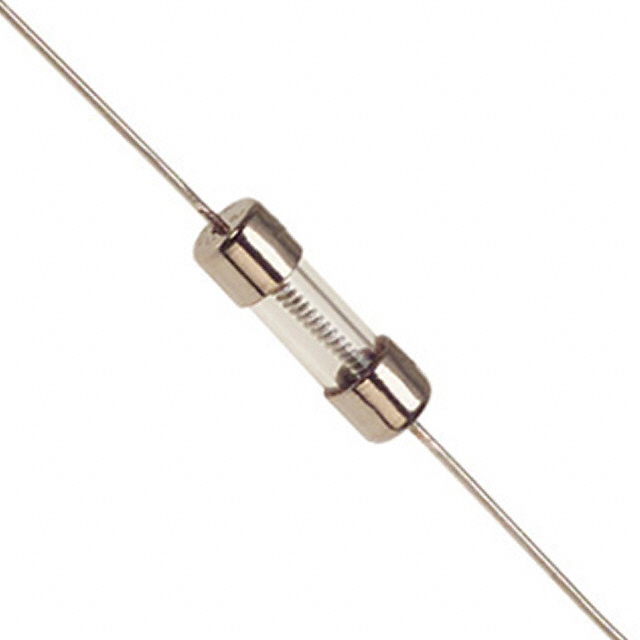
The dual-mode construction—offered in both cartridge and axial lead formats—introduces significant flexibility for PCB designers. Surface-mount boards benefit from direct cartridge insertion within minimal real estate, optimizing density in chassis-constrained enclosures. Axial configurations enable solid through-hole anchoring in environments subject to vibration or thermal cycling, supporting seamless integration across modular assemblies or retrofit upgrades. Real-world deployment in densely populated power distribution panels consistently reveals the device’s capacity to prevent trace burnout and secondary damage by isolating faults rapidly, even within cascaded protection schemes.
At the design level, the time-lag characteristic is calibrated through material gradation and element geometry, engineered to withstand repeated surge cycles. This results in predictable clearing times under both short-circuit and marginal overload scenarios. Such response harmonization minimizes system downtime while adhering to global safety standards (IEC, UL certifications), a nontrivial advantage for projects facing multi-jurisdictional compliance requirements or lifecycle service constraints.
A deeper analysis of integration strategies indicates further value in the Littelfuse 0218016.MXP’s low internal resistance, which restricts temperature rise and voltage drop under near-threshold loads. This property alleviates power derating concerns in high-density arrangements, ensuring that thermal budgets remain manageable even when multiple fuses operate concurrently. Evidence from accelerated aging tests affirms long-term stability of both fuse calibration and housing integrity, mitigating risks of glass cartridge fatigue or contact oxidation over extended service intervals.
Ultimately, the deployment of the 0218016.MXP supports architectural modularity, enabling interchangeable protection for diverse circuit topologies without the penalization of oversized fusing. By embedding both electrical resilience and spatial efficiency, this device aligns with the practical demands of contemporary engineering, delivering a sustainable solution that bridges classic cartridge reliability with the integration needs of rapidly evolving electronic infrastructure.
Key Features and Benefits—Littelfuse 0218016.MXP Fuse
The 0218016.MXP fuse leverages a meticulously engineered time-lag characteristic, validated under IEC 60127-2 Sheet 3, to deliver reliable protection in circuits exposed to transient overcurrents. This compliance serves not only as a formal benchmark but also as a practical assurance for engineers targeting equipment with dynamic power profiles, such as switched-mode power supplies, consumer electronics, or industrial control modules. The time-lag mechanism is achieved through carefully balanced element geometry and specialized alloy composition, allowing the fuse to tolerate controlled levels of surge or inrush without nuisance tripping, while maintaining a swift response to genuine fault conditions. This distinction proves essential in minimizing downtime and avoiding unnecessary service interventions in applications regularly subjected to capacitive or inductive loading.
The component’s RoHS compliance and lead-free construction directly address regulatory and environmental mandates, ensuring seamless integration into projects with global market reach. This material strategy not only meets evolving legislative landscapes but also anticipates long-term product lifecycle requirements, simplifying procurement audits and compliance documentation. Cartridge and axial variants extend adaptability across mounting topologies, facilitating platform standardization. In practical deployments, this flexibility means that alterations in PCB layout or mechanical packaging do not trigger a complete redesign or supply chain fragmentation, enabling efficient inventory management and reducing design iteration cycles.
A notable aspect lies in the fuse’s robust qualification methodology—routine testing beyond static parameters, such as surge pulse durability and thermal cycling, imbues confidence in operational longevity. Experiences from real-world field failures underscore the need for such multilayered verification, as minor variances in ambient heat or repetitive power sequencing can accentuate fatigue effects in lesser components. The 0218016.MXP’s consistent performance margin, therefore, mitigates both immediate risk and latent failure modes that might otherwise emerge late in a product’s deployment.
Integrating all these dimensions, the 0218016.MXP occupies a distinctive position for engineers striving to balance circuit resilience, compliance headroom, and streamlined sourcing. Its technical architecture allows for fine-grained protection tuning, closely aligning with modern system reliability requirements while reducing the complexity and unpredictability inherent in high-mix or revision-heavy projects. Ultimately, such design choices exemplify a forward-looking approach where component selection underpins both operational and organizational efficiency.
Compliance and Certifications—Littelfuse 0218016.MXP
Regulatory compliance forms the core of the Littelfuse 0218016.MXP’s design philosophy, with certifications functioning as both a technical guarantee and a catalyst for international market entry. This fuse is engineered to satisfy and often surpass global regulatory standards, and it possesses approvals such as RoHS for environmental safety and VDE for electrical reliability in its cartridge versions. These certifications are not mere formalities; they represent rigorous evaluations covering aspects from toxic material restrictions to operational safety under fault conditions.
At a foundational level, RoHS-compliance assures that the 0218016.MXP is free of hazardous substances, mitigating long-term environmental risks and aligning with the legislative frameworks of major markets. VDE certification, recognized worldwide, provides third-party validation of electrical endurance, dielectric strength, and failure response. The combination of these certifications signals robust design discipline, reducing the risk of delayed market rollouts due to compliance-based requalification or redesign cycles.
In practice, component-level certifications directly streamline integration into end systems. Systems engineers can incorporate the 0218016.MXP without necessitating redundant subsystem testing or extensive documentation, vastly simplifying certification processes for the overall device. The availability of these global certifications in the datasheet accelerates regulatory reviews and helps harmonize multi-region product launches, minimizing the administrative and technical friction often associated with divergent regulatory landscapes.
Leveraging certified components like the 0218016.MXP enables teams to focus resources on innovation and optimization instead of contending with complex conformance hurdles. In competitive sectors such as industrial automation and consumer electronics, this strategic choice often yields reduced NPI timelines and lowers compliance costs. The implicit trust granted by globally recognized approvals also supports risk management strategies, as certified components tend to demonstrate higher reliability metrics and lower sustained field issues.
A nuanced observation emerges when considering the tradeoffs between certification breadth and component flexibility. The forward-thinking certification strategy implemented with the 0218016.MXP positions it not only as a technically safe choice but also as a long-term enabler of modular system architectures, where compliance obligations can throttle time-to-market if overlooked. This layered approach, blending robust intrinsic safety with proactive regulatory alignment, establishes a foundation for both present and future-proof design pipelines, solidifying the 0218016.MXP’s role as a strategic asset in the global marketplace.
Typical Applications—Littelfuse 0218016.MXP
The Littelfuse 0218016.MXP fuse is engineered for supplementary circuit protection, enabling targeted safeguarding of components and PCB traces subject to overcurrent risks. Its slow-blow, or time-lag, characteristics are achieved through a specifically calibrated fusible element, which delays response to inrush currents but promptly interrupts sustained overloads. This selective response is vital in electronic subsystems frequently exposed to high inrush, such as switched-mode power supplies where large filter capacitors charge at power-up, or LED drivers encountering pulse loads. In such scenarios, conventional fast-acting fuses often lead to nuisance interruptions, undermining system reliability and serviceability.
Within appliance PCBs, strategic deployment of the 0218016.MXP limits the fault domain, ensuring that localized overcurrents—originating from motor stalls, relay faults, or semiconductor short circuits—do not propagate into upstream protection layers. This modularized protection approach enhances maintainability; faults remain confined, diagnosis is expedited, and system downtime is minimized. In industrial automation, PLCs and motor drives benefit from this topology, maintaining operational continuity even in the presence of repetitive transients or unpredictable load surges. The fuse's robust interrupting rating, paired with its stable thermal aging profile, further supports long-term reliability across harsh electrical environments.
The careful matching of fuse hold and blow characteristics to circuit inrush profiles is fundamental. Empirically, a close study of application-specific inrush signatures informs the rating selection process, preempting both nuisance tripping and underprotection. Unexpected startup loads—such as those encountered in audio amplifiers or high-frequency switching circuits—are intrinsically tolerated due to the time-lag response, which bridges the gap between protection and functionality.
Unique advantages of the 0218016.MXP arise from its stable performance over countless surge cycles and its compatibility with compact SMD assembly, facilitating high-density, multilayer board designs without layout penalties. This leverages modern production methodologies, allowing circuit designers to integrate granular, zone-based overcurrent mitigation without compromising on form factor or assembly cost targets.
The device thus exemplifies a solution that merges precise, application-aligned protection with practical deployment flexibility, supporting not only legacy circuit architectures but also the evolving needs of next-generation electronic platforms.
Electrical and Thermal Performance—Littelfuse 0218016.MXP
Electrical and thermal performance define the operational resilience and suitability of the Littelfuse 0218016.MXP fuse in demanding equipment environments. With a 16A maximum current rating under 250VAC/DC, this component is engineered for consistent circuit protection in moderate to high-power installations, including industrial controllers, power distribution units, and advanced HVAC systems. Its slow-blow response is a direct outcome of specialized internal element geometry and alloy composition, enabling energy absorption during transient surges without nuisance tripping under normal inrush events, such as motor startups or transformer energization.
The time-current and temperature re-rating curves are not merely data points but essential tools in engineering design. They delineate how the fuse delay dynamically adapts to specific overload amplitudes and durations, as well as elevated ambient temperatures. Accurate interpretation of these curves allows precise selection for mission-critical applications, where unpredictable load profiles and heat accumulation are common. Notably, performance margins can narrow under persistent high-temperature conditions; re-rating data assist in recalculating protection thresholds, ensuring consistent clearing characteristics and preventing premature product aging or failure.
Thermal management is closely intertwined with the fuse’s operational longevity. Installation practices that ensure efficient heat dissipation—such as spacing, airflow management around the fuse body, and minimizing nearby sources of radiant heat—can markedly improve long-term reliability. In field deployments, avoiding enclosure “hot spots” and monitoring real-world fuse heating under intermittent overload testing often reveal hidden derating needs, beyond laboratory predictions. Overlooking these subtleties may result in field failures or non-compliance with safety certifications.
The 0218016.MXP’s predictable behavior across fluctuating temperatures and cyclical electrical loads underscores its adaptability in densely packed electronic assemblies, backup power arrays, or equipment operating near rated capacity. Leveraging its full capabilities requires integrating fuse data sheets into the broader system-level thermal and electrical simulation, rather than treating protective devices as afterthoughts. This approach enables a defense-in-depth protective architecture, aligned with contemporary design-for-reliability standards prevalent in next-generation power architectures.
Mounting and Soldering Guidelines—Littelfuse 0218016.MXP
Mounting and soldering the Littelfuse 0218016.MXP fuse requires attention to both component compatibility and process conditions. This cartridge fuse, standardized to the 5x20mm footprint, mandates the use of holders explicitly engineered to accommodate its form factor and electrical characteristics. Thorough consultation of fuseholder datasheets is required to account for current re-rating, which is influenced by factors such as holder material conductivity, ambient temperature, and PCB layout constraints. Neglecting these variables can cause overheating during normal operation, leading to premature fatigue or nuisance tripping.
From a process engineering perspective, the 0218016.MXP introduces strict constraints in soldering methodologies. Specifically, it is incompatible with infrared and convection reflow systems due to thermal sensitivity and potential damage risks to the fuse element or encapsulation. Preferred integration solutions involve wave soldering, where controlled conveyor speeds and carefully profiled solder wave temperatures ensure joint integrity without subjecting the fuse to unwarranted thermal stress. Alternatively, manual (hand) soldering is viable, but it requires disciplined temperature control—maintaining the tip at 350°C ± 5°C and restricting contact to a maximum of five seconds per joint to prevent internal disruptions or latent defects.
Practical deployment often reveals that early design-stage alignment between mechanical layout and soldering process yields tangible improvements in both yield and in-field reliability. For instance, incorporating standardized holders with accessible electrode contacts and thermal standoffs can streamline production flow, reduce secondary touch-ups, and mitigate risks of solder bridging. Factoring in the fuse’s wave soldering preference at the board assembly planning phase permits optimized panelization and fixture design, preventing rework and contributing to robust process windows.
A nuanced consideration, often underestimated, is the thermal gradient developed across the fuse body during soldering, which can induce microcracks or alter time-current characteristics if not properly managed. Therefore, fixturing or heat sinking strategies during manual soldering—such as precision tweezers with integral thermal paths—can further safeguard sensitive elements. Additionally, establishing process controls to verify solder meniscus and wetting quality at each joint assures long-term electrical performance under cyclical load conditions.
Overall, integrating the 0218016.MXP within circuit protection strategies requires a process-aware approach, merging electrical, thermal, and mechanical design choices with tailored soldering profiles. Robust outcomes stem from early cross-functional review, disciplined adherence to rated soldering conditions, and continuous evaluation of the mounting environment to maintain compliance with fuse operational limitations.
Product Dimensions and Design Considerations—Littelfuse 0218016.MXP
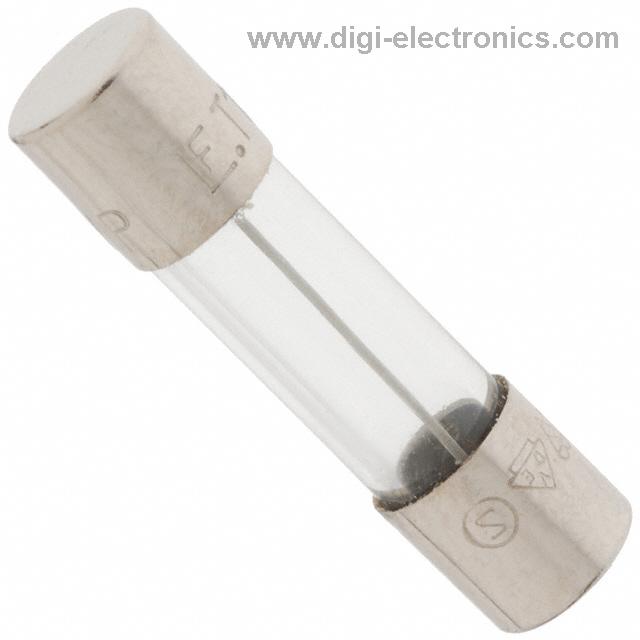
The Littelfuse 0218016.MXP fuse exemplifies adherence to the 5x20mm cartridge standard, a critical dimension that ensures interchangeability with established fuse holders, clips, and PCB layouts. This physical consistency underpins the reliability of integration into existing systems without the need for custom mechanical changes, which accelerates development cycles and simplifies supply chain management. However, the compact geometry of 5x20mm fuses necessitates meticulous evaluation of thermal behavior and arc suppression within constrained spaces. Proximity to sensitive components and conductor traces increases the risk of thermal propagation or dielectric breakdown during fault events. It is advisable to maintain minimum recommended air and creepage clearances—specified in safety standards such as IEC 60127—to mitigate these risks, especially in circuits subject to transient overcurrents or voltage surges.
Selecting the 0218016.MXP involves more than dimensional compatibility. The fuse's housing material, contact plating, and melting element must be assessed for endurance against mechanical shock and vibration, common in transportation and industrial automation applications. Field data highlight that improper mechanical mounting or insufficient contact pressure can result in intermittent protection or nuisance tripping. Leveraging the standardized part numbering system from Littelfuse streamlines accurate specification throughout design documentation and procurement workflows, mitigating errors that could arise during multi-supplier sourcing or assembly scaling.
Integrating this cartridge requires a layered approach—starting from precise mechanical fit, advancing to consideration of heat dissipation paths and environmental stressors, and culminating in robust verification against regulatory demands. The balance between minimal PCB real estate and mandatory safety margins is crucial; empirical tuning of pad layouts and mounting orientation can substantially reduce thermal hotspots and ensure fuse actuation remains within rated limits. In practice, iterative prototype testing under anticipated overload scenarios often reveals subtle enclosure ventilation or lead-in trace alterations necessary to guarantee optimal fuse performance over product lifetime.
Precision in initial selection, supported by the comprehensiveness of Littelfuse's documentation, delivers long-term reliability and compliance. Embedding the 0218016.MXP within the broader design context exemplifies the interplay between standardized form factors and nuanced application engineering, ultimately safeguarding both end-user assets and brand integrity.
Potential Equivalent/Replacement Models—Littelfuse 0218016.MXP
Assessing equivalent or replacement options for the Littelfuse 0218016.MXP fuse requires systematic evaluation beyond basic dimensional and time-lag parameters. Within the Littelfuse 218 Series, multiple SKUs adhere to the standardized 5x20mm form factor and delayed-action behavior; however, precise matching of rated current, rated voltage, and interrupting capacity is fundamental to maintain circuit integrity under both nominal load and overcurrent events. Detailed examination of these electrical ratings should extend to environmental tolerances and characteristic curves, which often exhibit subtle yet crucial differences across part numbers.
Divergence in national or regional certification regimes mandates close scrutiny. International applications demand fuses marked for IEC 60127-2 conformity, while domestic deployments may require UL, CSA, or other marks, directly influencing risk profiles in safety-critical designs. Cross-brand alternates—such as those from Bussmann, Schurter, or Bel Fuse—must exhibit not only mechanical interchangeability but also fully compatible melting integral, power dissipation, and endurance to pulse conditions. Empirically, minor variations in time-current characteristics or construction quality can result in nuisance tripping or compromised protection, particularly in dense or thermally stressed layouts.
Practical sourcing scenarios often introduce logistical constraints. During supply interruptions or when qualifying dual sources, technical datasheet alignment should be accompanied by controlled bench validation of fast blow versus time-lag performance, surge withstand, and degradation under repeated cycling. Variations in endcap material, fuse element alloy, or encapsulation method—though seemingly secondary—can influence thermal derating curves, aging behavior, and ultimately, long-term reliability in high-uptime systems.
A robust approach leverages not only regulatory cross-reference tools, but also iterative testing within the target assembly. For example, substituting an alternative series without correlating the precise pre-arcing and total clearing time against the protected load’s inrush profile can introduce latent vulnerabilities. Systematic evaluation thus fuses datasheet analysis with embedded stress testing, ensuring that replacements serve as true drop-in equivalents. Integrating these practices yields a scalable sourcing strategy while preserving overcurrent protection efficacy in both new designs and legacy upgrades.
Conclusion
The Littelfuse 0218016.MXP fuse delivers time-lag overcurrent protection suited to both AC and DC circuits, leveraging a controlled element response to transient surges. Underlying its performance is the precise calibration of melting characteristics, which balance fast reaction to sustained overload while permitting brief inrush currents typical in switched-mode power supplies or motors. Its compliance with IEC and UL standards streamlines international deployment, reducing certification lead times and harmonizing inventory management for global production. Compact form factor and standardized footprints simplify PCB layout, minimizing parasitic effects and facilitating straightforward integration across discrete or modular architectures.
Thermal characteristics and long-term stability under cyclic loading are reinforced by alloy selection and construction methodology, ensuring consistent behavior from prototype through extended field operation. Solderability profiles and mounting tolerances require diligent process control—capture of manufacturability feedback during early prototyping mitigates risk of cold solder joints or thermal damage, which could otherwise degrade fuse performance. In environments subject to vibration or mechanical stress, the fuse’s robust terminations maintain circuit integrity, backed by empirical drop and shock data.
Design teams often exploit the fuse’s time-lag curve to preempt nuisance trips in systems exposed to legitimate start-up surges, optimizing device uptime without compromising safety. Practical deployment exposes an advantage in fault isolation: the clear interruption of failed branches enables rapid root cause analysis and component replacement, supporting streamlined operations in high-availability settings. Integration within multi-voltage systems is coordinated using the fuse’s voltage rating envelope, supporting dual-use platforms and modular product line extensions.
Strategically, the 0218016.MXP serves not just as a safeguard, but as an enabler for aggressive feature expansion. Its reliable interruption characteristics offer risk containment that underpins warranty policies and brand confidence, particularly under challenging certification protocols. The fuse's predictable aging profile and minimal derating requirements simplify lifecycle management, further validating its selection for mission-critical and consumer-facing deployments alike. Balancing cost, space efficiency, and standardized compliance, the fuse iterates seamlessly from concept through mass production, fundamentally enhancing the reliability architecture of modern electronic devices.