 >
>


Product overview: AD5755-1ACPZ series by Analog Devices
The AD5755-1ACPZ series, manufactured by Analog Devices, is engineered as a quad-channel 16-bit digital-to-analog converter (DAC) optimized for high-reliability industrial systems. By integrating both current and voltage output stages, the device meets stringent requirements for automation infrastructure, addressing use cases from precision process control loops to actuator command in complex assembly lines. The architecture capitalizes on simultaneous high-resolution signal generation and channel-level independence, allowing each DAC output to be tailored for specific tasks in distributed control environments.
At the core of the device lies a high-precision DAC subsystem, supporting independently selectable voltage and current modes. The ability to configure channels for voltage outputs up to ±20 V or current outputs up to 24 mA increases its versatility in interfacing with a range of field devices, sensors, and actuators. The 16-bit resolution ensures fine-grained control, meeting the accuracy expectations in closed-loop and feedback-intensive applications. This flexibility underpins its widespread adoption in programmable logic controllers (PLCs) where multiple analog outputs must coexist seamlessly with varying load and interface conditions.
Dynamic power control embedded in the AD5755-1 series directly addresses a recurrent challenge in analog output modules: heat management and energy efficiency. By regulating supply currents in response to real-time load demands, the device actively minimizes power dissipation, a critical capability in dense channel deployment scenarios. This not only extends lifetimes of densely packed analog output cards but also allows for more aggressive cabinet packing densities without the thermally induced reliability penalties commonly observed in legacy designs. Enhanced protection mechanisms such as programmable output clamps and integrated fault detection further reinforce system-level safety and robustness, particularly in installations exposed to harsh industrial perturbations.
Integrated HART (Highway Addressable Remote Transducer) connectivity support significantly augments the functionality of the AD5755-1. This provision allows simultaneous analog signal transmission and digital communication over the same channel, streamlining remote device management and diagnostics. In field retrofits or greenfield deployments, this dual-layer signaling reduces wiring complexity and enables predictive maintenance schemes by surfacing diagnostic data alongside control signals.
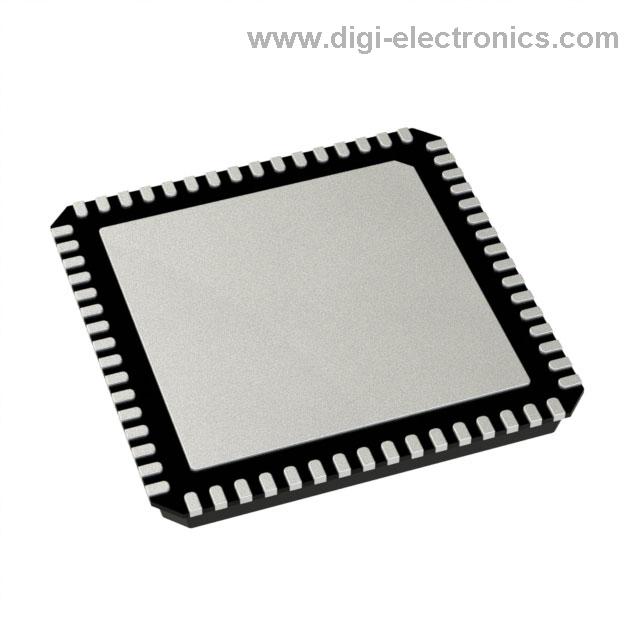
Hardware integration is facilitated through the compact 64-LFCSP-VQ package, which minimizes footprint and supports high-density surface-mount assembly. The device’s broad analog supply range (9 V to 33 V and −10.8 V to 26.4 V) ensures direct compatibility with standard industrial backplanes and reduces the need for complex power regulation. Meanwhile, the digital interface, spanning 2.7 V to 5.5 V, accommodates direct connection to a wide array of host microcontrollers and FPGAs, simplifying system integration for both new designs and existing platforms undergoing modernization.
The AD5755-1ACPZ is particularly effective in modular analog output nodes and hot-swappable control cards, where operational independence and rapid reconfiguration are required. In practice, isolating output channels on a per-task basis enables flexible assignment in multi-process environments, reducing mean time to reconfiguration and supporting on-the-fly adaptation to changing production requirements. Performance validation in actual installations demonstrates stable operation under fluctuating ambient conditions and varying electrical loads, supporting high system uptime even during transient faults or supply variations.
A distinguishing characteristic of the AD5755-1 series is the balance achieved between analog performance and system-level integration, streamlining not only output signal fidelity but the entire signal delivery chain, from host digital commands to field device actuation. Implementing such integrated power and communication features directly at the analog output module level is pivotal in supporting the migration towards software-defined automation architectures, where hardware flexibility and reliability are essential for scalable, future-proof deployments.
Architecture and functional highlights of the AD5755-1ACPZ
The AD5755-1ACPZ exemplifies a tightly integrated mixed-signal design, focusing on four independent digital-to-analog channels engineered for high configurability in industrial control environments. The underlying architecture leverages a flexible channel topology, allowing seamless selection between voltage and current output modes through terminal-level programming. This agility eliminates the need for external switches or complex multiplexers, optimizing system footprint and wiring for space-constrained installations. Channel output flexibility encompasses multiple industry-standard ranges—0–5 V, 0–10 V, ±5 V, ±10 V with 20% overranges, and current outputs at 0–20 mA, 4–20 mA, and 0–24 mA—directly matching requirements for automation, process control, and sensor excitation platforms.
At the core of its functional differentiation lies the dynamic power control subsystem, implemented via an adaptive, on-chip dc-to-dc boost converter. This converter intelligently tracks real-time load demands across channels, modulating the output driver supply from 7.4 V up to 29.5 V. Such dynamic regulation limits energy lost to heat within the package, preventing excessive thermal buildup during prolonged high-current operation typical in actuator control or remote PLC modules. In practical deployment, this mechanism enables dense multi-channel boards to operate at full specification without elaborate heat-sinking, preserving both reliability and compactness. In accelerated test environments, the adaptive power scheme demonstrably extends device lifespan and maintains tighter thermal margins under worst-case loading.
Calibration and system-level compensation are supported by programmable offset and gain registers per channel, enhancing installation-time and in-field accuracy. Users can trim output characteristics to counteract PCB layout variations or downstream circuit drift, leveraging an integrated voltage reference with superior stability (±10 ppm/°C max). Real-world calibration cycles are expedited through digital register access, reducing setup and maintenance downtime in large deployments.
To advance reliability and diagnostics, the AD5755-1ACPZ integrates asynchronous digital controls: fast output clearing, a programmable watchdog timer to mitigate firmware faults, and CRC-8 packet error checking for robust SPI communications. During field operation, these digital mechanisms reinforce operational safety, allowing rapid fallback and error isolation when subjected to harsh electrical environments or line-disturbances. The inclusion of short-circuit and transient protection circuitry ensures that each channel withstands inadvertent wiring faults or electrostatic events—common risks in installed industrial hardware without causing permanent device failure.
Device communication versatility is elevated by inclusion of the CHART pin per channel, directly supporting HART signal coupling. This capability enables simultaneous transmission of analog process signals and FSK-modulated HART digital data, simplifying integration into hybrid sensor networks and intelligent field devices. In plant retrofit scenarios, leveraging the built-in HART coupling feature streamlines upgrade paths and preserves legacy wiring, a distinct advantage over discrete or non-compatible signal generators.
Integrating such a versatile mixed-signal component can measurably reduce BOM complexity, PCB layers, and overall system size. A nuanced yet impactful benefit emerges in scenarios requiring concurrent multi-protocol fieldbus communication and precise analog control, where the AD5755-1ACPZ’s unified feature set amplifies overall system resilience and maintainability. This convergence of advanced power management, calibration granularity, and multilayered protection reflects an architectural shift towards smarter, more robust analog front ends, driving higher value in distributed control and automation networks.
Electrical characteristics and performance of the AD5755-1ACPZ
The AD5755-1ACPZ DAC is engineered for high-precision analog control where predictable and repeatable signal fidelity is vital. At its core, full 16-bit resolution is maintained across all outputs, with guaranteed monotonic behavior and tightly specified nonlinearity—differential nonlinearity (DNL) is confined to ±1 LSB, and integral nonlinearity (INL) is limited to ±0.006% of full-scale within standard voltage ranges. This architecture minimizes quantization artifacts and ensures uniform signal granularity, critical for closed-loop actuators and measurement systems. On overrange configurations, accuracy is slightly adjusted, reaching up to ±0.008%, yet the device consistently avoids disruptive step transitions or missing codes.
Voltage output fidelity benefits from low total unadjusted error (TUE): ±0.04% for bipolar mode and ±0.06% for unipolar mode. Such metrics translate into superior margin for calibration-sensitive applications—including industrial automation and analog instrumentation—especially under dynamic loading. Under test conditions involving rapidly varying output, the distortion-free response is directly attributed to both tight DNL and low output noise. Experienced users report that even in noisy environments, output signals retain their linearity, enabling precise control tasks such as valve positioning or motor speed regulation.
Current output performance is customizable through selectable precision resistors. When paired with high-accuracy external resistors, the TUE constrains to ±0.05% of full-scale, enabling high-end loop-powered sensors to function without periodic recalibration. Utilizing the internal resistor increases flexibility but relaxes TUE to ±0.14%, suiting less stringent scenarios or compact designs. The stability of both configurations is underpinned by extended reliability in harsh environments—after 1000 hours at 150°C, drift remains negligible, an outcome partially due to intrinsic packaging and the internal reference's thermal control.
Power supply disturbance is effectively suppressed by a DC PSRR of 50 μV/V for voltage outputs, confirming that even fluctuating DC rails will not induce measurable signal deviation. This immunity is reinforced in applications where supply voltage integrity cannot be guaranteed, such as distributed process control islands or mobile measurement modules. For rapid signal changes, the DAC’s output stage demonstrates industry-first settling times: 11 μs for 5 V voltage steps and 15 μs for full-scale current excursions. These specifications allow for high-frequency loop updates in servo and feedback systems, eliminating latency-induced errors and ensuring prompt actuator responses.
Electrical safety and reliability are amplified through integrated protection mechanisms. Programmable output limits guard against accidental short-circuits, while dynamic headroom and footroom management prevent output stage overdrive even at rail extremes. In relay-driven current systems, the high output impedance reduces leakage and cross-talk, facilitating multiplexed analog outputs without interaction. Additionally, built-in fault and alert signals streamline system-level diagnostics; this is crucial for embedded control, as faults are intercepted and flagged before propagating, reducing downtime and maintenance cycles.
One subtle but critical insight is that the device’s holistic error budgeting—across static and dynamic modes—enables direct interfacing to precision transducers and actuators without extensive external trimming or compensation. This reduces BOM complexity and integration time, benefiting system architects prioritizing both performance and manufacturability.
Interface, programmability, and diagnostic functions of the AD5755-1ACPZ
The AD5755-1ACPZ integrates a robust serial communication framework, combining compatibility with SPI, QSPI, MICROWIRE, DSP, and native microcontroller protocols. The interface, optimized for 3-wire configurations, reliably sustains clock rates up to 30 MHz, thereby supporting both rapid data transmission and practical integration across a wide array of control platforms. Advanced error management is embedded at the link layer, notably through optional CRC-8 verification and an onboard watchdog timer that continuously validates data integrity and connection activity. Fault isolation at the digital interface level is thus proactively maintained, minimizing risk of misconfiguration or silent data loss.
Programmability centers around register-accessible configuration spaces, enabling granular adjustments to output ranges, operational modes, and calibration parameters. These registers are accessible both for writing and readback, with transparent retrieval of register states and status flags during ongoing write operations—pivotal for live verification in automated or remotely monitored installations. The readback architecture streamlines in-situ diagnostics and supports routines for closed-loop system health assessment, thereby facilitating adaptive control strategies.
On-chip diagnostic feature sets are extensive. Continuous output fault detection, programmable range alerts, and dynamic status feedback combine to deliver multi-layer monitoring of device operation and signal fidelity. The inclusion of programmable slew rate control provides precise shaping of output transitions, essential for suppressing transient-induced errors in sensitive measurement or actuation chains. Digital offset and gain calibration via register commands serve to compensate for systemic and environmental drift, ensuring output linearity and reliability over temperature, aging, or voltage variation. Reference selection, switchable between internal and external sources, gives flexibility for integration in both isolated and coordinated analog subsystems—this extends operational adaptability without compromising accuracy.
For high-reliability system designs, asynchronous clear mechanisms allow immediate forcing of outputs to safe states, supporting fast-response safety interlocks and robust system resets. This capability, subtly vital in fault management or emergency scenarios, is engineered for seamless actuation without perturbing the broader digital communication flow. Layered configuration and diagnostics yield a toolkit for iterative performance tuning, functional safety, and predictive maintenance.
In practical deployments, scalable programmability and deep diagnostic transparency enable fast commissioning and targeted troubleshooting. Balancing high-speed interfacing with comprehensive monitoring, the AD5755-1ACPZ fits within complex control architectures where both deterministic performance and system insight are critical. The architectural layering of communication, programmability, and fault management reflects a design philosophy that embeds reliability and adaptability at every functional level, yielding effective solutions for industrial automation, process control, and advanced instrumentation.
Power management and thermal considerations for AD5755-1ACPZ
In the AD5755-1ACPZ, power management and thermal considerations are tightly interwoven with its system-level performance. At the heart of its architecture is a dynamic power control mechanism. By continuously monitoring load conditions, the device leverages an internal dc-to-dc boost converter to set the output driver voltage only as high as absolutely required. This closed-loop adjustment significantly curtails unnecessary power dissipation, directly reducing thermal stress on both the chip and the surrounding circuitry. In practice, this translates to improved reliability in prolonged full-scale operation, particularly where channels may be sourcing substantial current or sustaining high voltage modes.
The supply voltage flexibility—AVDD spanning 9 to 33 V, AVss from −26.4 V to +26.4 V, and a wide 2.7 to 5.5 V DVDD—aligns with demanding automation and instrumentation environments. This broad range allows seamless integration into both legacy and modern systems without complex power rail design, minimizing auxiliary conversion losses. Each channel draws power in a paced, independent fashion, preventing localized heating. Thermally-aware PCB layout techniques further enhance this intrinsic balance: extensive copper pours under thermal pads, deliberate separation of power and signal traces, and well-placed vias supporting vertical heat flow all serve to dissipate accumulative heat with high efficiency. Layer stacking and component orientation are often optimized to direct thermal energy away from sensitive analog domains toward dedicated ground planes, flattening the thermal profile and allowing higher power density without premature derating.
Protection circuitry, fully embedded, fortifies against short-circuit and overload scenarios. Upon detecting abnormal loads, the device autonomously limits its output or enters a safe state, cutting down on the possibility of thermal runaway or permanent damage. This not only safeguards the IC itself but also plays a pivotal role in maximizing system uptime in field deployments where harsh electrical transients or wiring errors can occur unpredictably. This measured balance between protection sensitivity and minimal false triggering sustains output availability even under noisy industrial conditions.
In practical deployments, leveraging the AD5755-1ACPZ’s features requires careful coordination between firmware monitoring, PCB layout, and ambient management strategy. For example, when scaling to multi-channel output cards in confined enclosures, uniform copper distribution and planned airflow pathways become critical. Unexpectedly, aggressive output ramping can exacerbate thermal cycling, so prudent software control of setpoint changes and diagnostic polling intervals ensures smoother device thermals under dynamic workloads. Close adherence to the datasheet’s layout recommendations not only improves heat distribution but also mitigates electromagnetic interference, boosting overall channel-to-channel accuracy.
A core insight emerges: intelligent on-chip power adaptation, combined with disciplined board-level engineering, enables robust operation even near edge-of-envelope scenarios. This reduces the necessity for oversized heatsinks or derating—a shift that supports more compact, scalable system designs without compromising operational longevity or precision. As modern industrial nodes densify, the payoff from this cohesive approach is substantial, permitting higher integration and future-proofing investments in precision analog output infrastructure.
Application scenarios for AD5755-1ACPZ series
The AD5755-1ACPZ series is engineered for demanding industrial automation and process control systems where high channel density, robust reliability, and versatile output configurations are pressing requirements. Its four independent channels, each supporting voltage and current output modes—including support for industrial-standard ranges—optimize the architecture for integration into tight spaces such as rack-mounted PLC analog output modules, compact actuator feedback units, and distributed I/O terminal blocks. Each channel’s programmable output span and on-chip diagnostics facilitate precise scaling, error detection, and maintenance, supporting the high reliability needed for 24/7 plant operations.
At the core of its appeal lies seamless interoperability with fieldbus-enabled instrumentation. Built-in HART connectivity not only assures compliance with legacy and modern installations but also accelerates commissioning and simplifies remote device diagnostics. The resolution and accuracy of its digital-to-analog conversion, coupled with well-designed output protection features, address typical issues faced in harsh industrial environments such as transients, ESD, and unintended loads. Its SPI-compatible host interface streamlines integration with both proprietary and open PLC architectures, permitting rapid configuration and channel expansion.
Design strategies frequently employ complementary Analog Devices products to construct robust signal chains with reduced validation overhead. HART modems like the AD5700/AD5700-1 are incorporated directly into the signal path, enabling digital communication overlay without signal interference or EMC degradation. Precision voltage references such as the ADR445 or ADR02 ensure long-term stability and mitigate drift, which is crucial when driving mixed-signal control loops or high-precision valves. The deployment of ADI’s digital isolators, exemplified by the ADuM1410/ADuM1411, helps maintain safety and data integrity in high-noise environments with multiple ground domains, separating analog output stages from digital controllers. Switch-mode regulators such as ADP2302/ADP2303 provide efficient, compact power solutions, reducing thermal footprint and supporting operation in panel-dense installations.
Successful field applications highlight a notable reduction in system downtime attributed to the advanced fault monitoring integrated within each output. Early detection of line breaks or power anomalies allows predictive maintenance scheduling, surpassing prior generations dependent on post-failure interventions. Configurability of channel output—switching between current sourcing and voltage output without board rework—has demonstrated measurable enhancements in both time-to-market and hardware reuse across successive automation projects.
In practice, leveraging the AD5755-1ACPZ series as a foundation for analog output subsystems not only bolsters scalability and design margin but also future-proofs architectures for the expanding demands of smart manufacturing. Its layered design—encompassing embedded diagnostics, stringent compliance, and application-level flexibility—underscores a shift toward modular, software-configurable hardware in industrial automation. This approach aligns with evolving trends in adaptive plant design and underscores the value of stackable, validated reference designs in accelerating both hardware development cycles and system certification efforts.
Potential equivalent/replacement models for AD5755-1ACPZ
When considering alternative or upgrade options for the AD5755-1ACPZ, it is critical to assess the candidate models through a multi-layered evaluation, beginning with their underlying architectures and progressing toward application-specific fit. The AD5755, for example, is architecturally aligned with the AD5755-1ACPZ and delivers comparable performance in voltage and current output modes. Its variations in auxiliary features—such as available power supply configurations and digital interface options—necessitate a careful audit of design compatibility, especially with respect to pinout, communication protocols, and system voltage requirements. These differences often translate into subtle impacts on board layout, EMC behavior, and thermal management, which can only be fully appreciated in the context of real-world hardware integration and layout constraints.
Exploring the AD5757 in the same product lineage reveals enhancements in channel density, analog performance, or microcontroller communication flexibility tailored for multi-channel precision output. However, particular attention is warranted regarding its output voltage/current range and package form factors. The operational distinctions between the AD5755 and AD5757 become pronounced in automated test environments or large-scale process control systems, where throughput, board density, and external isolation requirements may dictate specific characteristics—such as output swing, fault detection mechanisms, or integrated diagnostics.
The extended AD57xx family offers further granularity, particularly for scenarios requiring HART compatibility and variable channel counts. Here, the designer must dissect the device datasheets for nuances in integrated HART circuitry, available dynamic range, and noise floor performance. The presence or absence of on-chip isolation, power sequencing management, and fail-safe output states often emerges as decisive criteria in harsh industrial or mission-critical deployments. In practice, projects with legacy infrastructure constraints or certification standards—such as SIL or IEC directives—demand exhaustive cross-verification of these electrical and safety parameters. The integration of HART signaling paths, for instance, imposes subtle board-level tradeoffs in filter design and firmware stack customization, occasionally revealing latent system bottlenecks during evaluation.
A structured cross-rating process must systematically verify electrical equivalence across parameters like resolution, monotonicity over temperature, supply and output compliance ranges, digital latency, and mechanical package footprint. With increasing signal chain complexity, decisions frequently hinge not merely on feature parity but on power dissipation envelope, long-term availability, and software toolchain support. Experience shows misalignment on a seemingly minor specification—such as startup sequencing behavior or calibration granularity—may propagate significant design churn at late stages, especially in tightly constrained field applications.
In summary, a successful transition or upgrade from AD5755-1ACPZ necessitates not just a datasheet-level match but a layered assessment incorporating board, system, and certification perspectives. Approaching the selection as an opportunity to harmonize with the broader system roadmap—factoring in lifecycle longevity, supply chain stability, and architectural scalability—yields tangible value and resilience for critical analog output nodes.
Conclusion
Analog Devices’ AD5755-1ACPZ emerges as a multifaceted quad-channel DAC tailored for next-generation industrial output applications. At its core, the device delivers 16-bit resolution across four output channels, enabling precise analog signaling vital for closed-loop process control and motion systems. The architecture supports current and voltage output modes with dynamic range configuration, streamlining adaptation to diverse actuator and feedback interfaces common in PLCs and distributed field modules. This channel flexibility expedites system-level customization during commissioning and field upgrades, minimizing re-design cycles and hardware spares.
Integrated HART connectivity sets the AD5755-1ACPZ apart, permitting simultaneous analog control and digital bi-directional communication over existing wiring. This dual-mode operation simplifies remote asset management, diagnostics, and calibration workflows, directly meeting evolving standards in smart instrumentation and IIoT environments. The on-board error diagnostics suite proactively detects open-circuit, short-circuit, and thermal faults. Real-time status signaling facilitates predictive maintenance strategies, reducing downtime and service overhead. Such embedded protection measures consistently enhance system uptime, particularly in mission-critical infrastructure nodes.
Thermal management reflects advanced device engineering, incorporating thermal warning and shutdown features. These mechanisms serve both as safeguards against localized overheating and as enablers for higher-density I/O board layouts without compromising reliability. Field experience verifies that stable performance under variable load conditions with robust thermal margins correlates strongly with lower total cost of ownership in long-term deployments.
From an integration viewpoint, the AD5755-1ACPZ offers a standardized SPI interface and pin configuration, accelerating hardware platform compatibility and ease of software driver development. The combination of architectural versatility and rigorous functional monitoring allows system designers to adopt centralized or distributed I/O strategies with equal confidence. When evaluated against legacy DAC solutions, the device demonstrates lower calibration drift and superior immunity to electrical transients, which proves advantageous in electrically noisy industrial sites.
A subtle but critical insight is that the AD5755-1ACPZ’s holistic approach—layering rich feature sets atop robust foundational performance—profoundly impacts modularity and future-proofing in industrial automation architectures. By embedding not only high electrical precision but also thermal resilience and smart diagnostic logic at the silicon level, the device supports accelerated development cycles and high operational assurance, while aligning with digital transformation agendas in process industries. This synthesis makes the AD5755-1ACPZ a reference-grade solution for designers seeking a reliable, scalable, and intelligent analog output subsystem.