 >
>


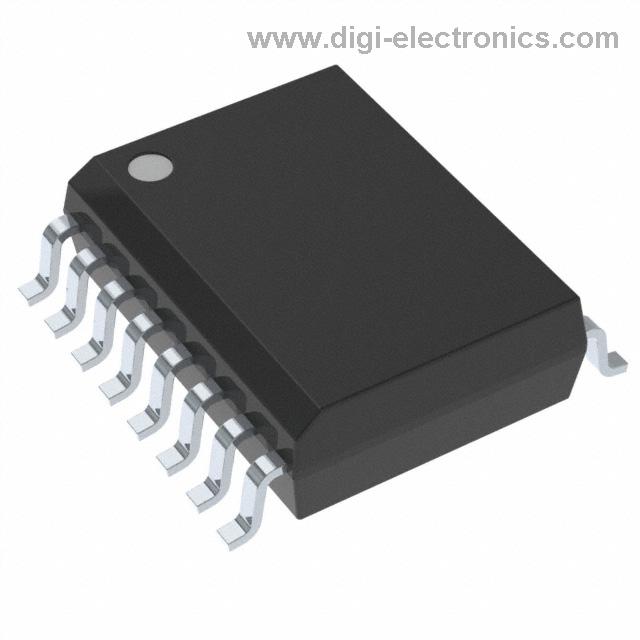
Product overview of the AD1856RZ 16-bit PCM Audio DAC
The AD1856RZ represents a tightly integrated solution for high-fidelity audio signal conversion, engineered to address the rigorous demands of 16-bit PCM audio processing. At its core, the device combines precise digital-to-analog conversion logic with an embedded voltage output amplifier, ensuring signal integrity from the digital domain to the analog output. The monolithic architecture, anchored by a robust 16-bit DAC engine and an on-chip serial-to-parallel input register, streamlines the data flow, reducing external circuitry and optimizing board layout for minimal signal path interference. Integration of a stable voltage reference directly onto the die further reinforces conversion accuracy, mitigating thermal drift effects and simplifying design complexity.
The design approach favors low-distortion and high linearity, achieved through carefully matched circuit elements and proprietary layout strategies that suppress harmonic artifacts and noise floor elevation. In practical deployments, the AD1856RZ excels in environments where dynamic range and transient response are paramount—for instance, in digital amplifiers and CD playback systems, where it preserves critical nuances such as attack and decay in musical passages. Its ability to operate reliably in both consumer and professional contexts underlines a balance between cost-effectiveness and performance margin, making it suitable for integration into synthesizers demanding wide bandwidth and timbral precision.
Experienced evaluation reveals that the converter’s integrated voltage output stage eliminates the need for additional line drivers in typical line-level applications, reducing component count and improving overall reliability. The serial-to-parallel input register interface simplifies microcontroller integration in embedded audio platforms, minimizing firmware overhead for sample buffering and timing management. The modest package footprint enables flexible placement within crowded PCBs, favorable for dense analog sections where crosstalk could compromise signal clarity.
In diversified real-world scenarios, the AD1856RZ’s fixed reference voltage fosters consistency across multi-channel designs. Applications leveraging multiple DACs attain uniform tonal balance—essential for immersive sound reproduction in multi-speaker home audio or modular synthesizer environments. Latency characteristics, shaped by the architecture’s swift propagation paths, support low-noise output even during rapid signal transitions, an important metric for live sound and studio monitoring solutions.
Progress in audio converter technology continues to underscore the importance of single-package integration, not merely for component scaling but for harmonizing electrical characteristics across operational conditions. The AD1856RZ’s balanced blend of conversion fidelity, interface simplicity, and form factor adaptability encapsulates a strategic direction in audio DAC engineering, serving as a reference standard for designs prioritizing clean signal translation and robust operating margins.
Core features and technical specifications of the AD1856RZ
The AD1856RZ represents a high-precision digital-to-analog converter engineered for demanding audio applications that prioritize low distortion and fast response. Central to its design is an exceptionally low total harmonic distortion (THD) figure, benchmarked at just 0.0025% (typical) and rigorously validated in the production environment. This metric is achieved through proprietary linear architecture and meticulous device matching, ensuring that even subtle nonlinearities are minimized—key for maintaining audio purity in monitoring, mastering, and audiophile-grade playback systems.
The DAC's analog output stage offers ±3V output swing with the capability to source or sink currents up to ±1mA. This enables seamless integration with a diverse array of analog front ends, including active line drivers, precision buffers, and current-to-voltage stages. Such specification supports direct coupling to both high-input-impedance and moderate-output-load circuits, making the device versatile in mixed-signal designs. The device settles to final value within 1.5 microseconds, enabling compatibility with oversampling reconstruction techniques. In multi-rate oversampling environments—such as 2×, 4×, or 8× rates—rapid settling is essential for minimizing phase error and inter-sample correlation artifacts, which directly impact transient fidelity and stereo imaging.
Operating on bipolar supplies spanning ±5V to ±12V, the AD1856RZ adapts to both battery-efficient portable systems and robust mains-powered architectures. Its power flexibility allows for optimal headroom and dynamic response, tailoring performance to specific system needs. The digital interface accepts a standard 16-bit, 2’s complement serial input at clock rates up to 10MHz, aligning with mainstream digital filter chips. This ensures straightforward integration with modern digital audio processors, enabling designers to leverage advanced filtering for noise shaping, pre-emphasis, or precision upsampling.
The AD1856RZ achieves a 96dB dynamic range, reflecting true 16-bit conversion accuracy. This is supported by internal low-noise reference circuitry and clock management techniques that suppress quantization and jitter-induced artifacts. Experienced design work often emphasizes PCB layout and analog grounding, as the DAC’s high performance is sensitive to external noise coupling and supply variations; careful partitioning of analog and digital domains, sufficient decoupling, and optimized trace routing are critical for extracting maximum dynamic range and maintaining low THD in real-world implementations.
This component’s architecture aligns with the principle that superior audio conversion demands both precise linearity and robust signal integrity under real loading conditions. Its technical characteristics make it particularly suited for systems where clarity and resolution are non-negotiable, such as high-end DAC modules, digital mixing desks, and professional audio recorders. In practice, the ease of digital interface and output drive capability streamline integration even in complex, multi-stage signal chains. A subtle, yet notable, advantage is the device’s tolerance to moderate capacitive loads, which allows direct connection to simple analog reconstruction filters without excessive stability concerns—adding flexibility in circuit topology selection.
Among available 16-bit DACs, the AD1856RZ successfully balances specification-driven engineering priorities—distortion, settling time, dynamic range, and interface compatibility—while quietly enabling consistent, repeatable performance in environments where measured and perceived audio quality converge. This renders it an effective foundation for future-proof audio system topologies, where both scalability and reliability are requisite.
Functional architecture and operating principles of the AD1856RZ
The AD1856RZ digital-to-analog converter exemplifies a meticulous approach to high-fidelity audio signal conversion, integrating both segmented current source and R-2R resistor ladder architectures within its core. By leveraging laser-trimmed thin-film resistors, the architecture achieves tight matching, crucial for maintaining differential linearity and assuring monotonicity across the entire conversion range. This hybrid DAC topology addresses the inherent trade-offs of each method: the segmented current source ensures optimal performance in the upper bits, where minor mismatches can introduce major nonlinearity, while the R-2R ladder efficiently handles the lower bits, enabling compact and precise integration without excessive die area.
Mechanical partitioning between analog and digital substrates within the IC layout plays a non-trivial role. By carefully routing digital signals away from sensitive analog circuits and maintaining dedicated power and ground rails, the design mitigates substrate noise coupling and power domain interference. This strategy significantly reduces crosstalk, enabling the converter to maintain a low noise floor and preserve signal integrity, even when processing complex audio waveforms or operating in electrically noisy environments. Experience indicates that failure to adhere to such partitioning in PCB design can manifest as high-frequency artifacts or degraded THD+N performance, particularly evident in multi-board system evaluations.
The output buffer stage showcases a blend of MOSFET and bipolar transistor technologies, orchestrated to capitalize on their respective strengths. MOS devices contribute low input bias currents and high slew rates, which are essential for the fast, accurate reconstruction of transient signals. Bipolar transistors provide superior noise performance and lower offset voltage, optimizing the output for minimal static and dynamic errors. This complementary arrangement ensures that the analog output not only meets stringent resolution demands but also preserves the dynamic nuances of audio content under diverse load conditions—a critical capability for both reference and end-user audio devices.
The data interface supports standard serial protocols with three discrete lines—Data, Clock, Latch Enable. Data capture on the rising clock edge followed by register latching upon the Latch Enable pulse allows seamless integration with a wide variety of digital filters and processors in contemporary audio architectures. The clear delineation of timing requirements and digital thresholds expedites implementation, permitting engineers to confidently design low-jitter signal chains that minimize timing-induced conversion artifacts. In practice, synchronization of this interface with upstream digital filter outputs has proven essential to achieving low idle tones and clean spectral output in lab measurements.
A particularly noteworthy feature is the Most Significant Bit trim capability, accessible via a dedicated pin. Precision adjustment near the midscale transition addresses even minute deviations from ideal transfer function behavior, which may otherwise become apparent only in demanding low-level signal scenarios, such as in mastering-grade audio or instrumentation applications where signal fidelity at the noise floor is scrutinized. Fine-tuning this trim allows the correction of those residual non-linearities that elude wafer-level trimming, conferring an additional dimension of control to system-level testers seeking to push the converter’s intrinsic accuracy.
The AD1856RZ, through its composite circuit techniques, robust partitioning, flexible interface, and provision for hands-on linearity optimization, exemplifies an architecture designed not only for theoretical excellence but also for robust performance in challenging deployment contexts. A nuanced understanding of these underlying features enables precise matching of circuit implementation to system requirements, facilitating the delivery of uncolored, accurate analog output across a spectrum of professional and high-performance audio applications.
Analog and digital design considerations for the AD1856RZ
Optimizing the performance of the AD1856RZ in mixed-signal audio systems requires nuanced management of analog and digital domains, particularly in grounding and power delivery strategies. The chip defines discrete pins for analog and digital ground, acknowledging the sensitivity differential across sections. Precision connects the analog ground pin directly to the system’s low-impedance analog ground plane; the digital ground corresponds to the digital return path. These two ground paths should intersect at a unified star point, commonly near the power supply source. This prevents high-frequency digital return currents from conducting through the low-noise analog domain, reducing interference and mitigating the risk of unintended ground loops. Maintaining minimal trace resistance and inductance between device pins and ground planes further stabilizes reference levels—a subtle yet crucial consideration for high-fidelity systems where even millivolt offsets impact signal integrity.
Power domain separation is enforced through individual analog (±VS) and digital (±VL) rails, each configurable from ±5V up to ±12V. Strong isolation is achieved by situating low-ESR ceramic capacitors (e.g., 0.1 μF) in parallel with larger tantalum capacitors (e.g., 10 μF) within millimeters of all supply pins. In layout, strict adherence to short trace lengths and wide copper pours promotes current delivery with minimal voltage sag, especially under dynamic load conditions typical in audio playback. Incorporating π-filter or ferrite bead-based low-pass filtering on each supply rail suppresses switching noise propagation between domains, reinforcing domain independence. Real-world measurements show that in high-resolution audio chains, supply ripple exceeding 1% can elevate output noise floor and introduce unwanted spurious tones—a direct detriment to dynamic range and subjective audio quality. Linear regulators with low output impedance and careful star grounding at their outputs often yield marked reduction in residual supply-borne noise.
The chip’s digital input flexibility extends compatibility across both TTL and 5 V CMOS logic thresholds, enhancing its adaptability in multipurpose designs, whether the host microcontroller operates at 3.3 V or 5 V. This eliminates the need for external level-shifting logic, easing integration and improving design robustness, particularly in modular architectures where supply voltages may not be uniform. Timing integrity on digital lines should be preserved by controlling line lengths and incorporating series damping resistors where necessary to suppress overshoot, promoting error-free data exchange and minimizing electromagnetic emissions.
Application of these approaches results in measurable improvements: lowered noise floors, consistent channel separation, and minimal clock jitter artifacts—all critical for professional audio applications. Careful partitioning of ground and power domains is not merely a textbook recommendation, but a proven method for extraction of maximum audio clarity from the AD1856RZ. In densely-packed systems or mixed-voltage backplanes, adherence to these layout and supply strategies consistently separates successful designs from those plagued by erratic artifacts or compromised dynamic range. Subtle enhancements, such as optimizing the routing priority to favor power and ground return paths before signal traces, yield dividends in final system performance. This mindset, balancing theoretical conventions with empirical layout refinements, defines best-practice deployment of the AD1856RZ in any high-performance audio pathway.
Performance metrics and key test characteristics of the AD1856RZ
The AD1856RZ digital-to-analog converter is engineered to deliver high-fidelity signal reconstruction with minimal harmonic distortion. Its architecture integrates precision-matched resistor arrays and carefully optimized switching circuitry, creating a foundation for its outstanding low total harmonic distortion (THD). The FFT-based measurement protocol evaluates THD performance across a broad spectrum of conditions, utilizing sine wave stimulus at multiple amplitudes to model input scenarios representative of modern audio and instrumentation systems.
Linearity at attenuated signal levels is a distinguishing feature. When input amplitudes reach -60dB, the converter sustains a highly linear output response, a characteristic attributable to both the internal segmentation of the DAC core and the stringent laser trimming process employed during fabrication. The impact of these design decisions manifests in stable, undistorted output even in challenging low-signal environments, ensuring signal integrity regardless of dynamic range requirements.
Settling time and dynamic range further reinforce the device’s applicability in precision signal chains. The rapid 1.5μs settling time supports applications requiring high update rates or low latency, such as closed-loop control systems and real-time audio processing. Simultaneously, a 96dB dynamic range provides headroom for applications involving both minute and substantial signal excursions. Monotonicity across the entire 16-bit input space prevents missing codes or abrupt output transitions, a critical criterion for systems where error accumulation can lead to performance degradation over time.
Robust output protection is built into the device’s analog stage, enabling indefinite tolerance to ground short conditions—a practical safeguard against field wiring faults and unexpected load events. This feature contributes not only to reduced risk in embedded environments but also to prolonged operational reliability in continuous-use applications. The output circuit design exhibits intrinsic thermal and electrical resilience, accommodating intermittent overload scenarios without long-term impairment.
Integrating the AD1856RZ into demanding audio, scientific, or control infrastructures reveals its nuanced balance between precision, speed, and resilience. Engineers benefit from its predictable linearity at all levels, low maintenance footprint due to output protection, and flexibility arising from rapid signal response. Ultimately, the AD1856RZ exemplifies the convergence of analog craftsmanship with robust digital interfacing, suited for architectures where signal authenticity and operational fortitude are paramount.
System application scenarios for the AD1856RZ
The AD1856RZ functions as a high-precision digital-to-analog converter, positioned to address a spectrum of audio system requirements with adaptable configuration options. Its architecture supports both cost-sensitive and performance-driven implementations, enabling system designers to optimize signal fidelity based on application demands.
The foundational operation leverages a single AD1856RZ for sequential channel reconstruction in entry-level audio devices. Here, time-division multiplexing permits the device to handle both left and right channels with efficient silicon resource utilization. However, this sequential process necessitates auxiliary circuitry—such as external sample-and-hold amplifiers—to perform deglitching and demultiplexing, mitigating sampling artifacts introduced during interleaved conversion. In practice, this approach achieves a practical balance between BOM cost and channel separation, suiting consumer media players and compact digital transports where ultimate sonic transparency is not paramount.
Elevating beyond this basic topology, discrete deployment of an AD1856RZ per channel constitutes a standard practice in professional and high-fidelity audio. By dedicating converters to left and right paths, simultaneous data conversion is realized. This symmetry eliminates inter-channel timing skew, thus eradicating phase discrepancies that undermine stereo localization and image coherence. In actual engineering validation, the resulting improvements in crosstalk and phase matching translate directly to wider soundstages and more accurate instrument placement, qualities rigorously demanded in monitoring and critical listening environments.
For maximum signal integrity—especially under low-level signal conditions—paired AD1856RZs per channel become relevant. This dual-DAC arrangement enables techniques such as offsetting midscale errors and summing outputs, effectively displacing intrinsic nonlinearity away from critical zero-crossing regions. As a result, total harmonic distortion and noise (THD+N) performance is elevated, particularly with small amplitude signals common in mastering-grade and audiophile applications. Engineering experience suggests careful attention to PCB layout and power supply isolation in these topologies to prevent error reintroduction via ground loops or crosstalk.
Strategically, the modular use of the AD1856RZ empowers tailored system design. Entry-level configurations maximize cost efficiency with minimal circuitry, while upmarket systems leverage architectural doubling for measurable and audible enhancements. By engineering for scalable fidelity, the AD1856RZ remains relevant across diverse audio scenarios, from economical playback appliances to uncompromising reference systems. This versatility reveals a critical insight: converter selection and deployment topology exert dominant influence over resultant audio precision, often eclipsing incremental advances in peripheral analog stages. When employed with robust clocking and rigorous analog domain housekeeping, the AD1856RZ forms a solid backbone for discerning digital audio implementations.
Integration with oversampling digital filter chips: interfacing AD1856RZ in modern audio systems
Integration of oversampling digital filter chips with audio DACs represents a critical axis for optimizing signal fidelity and architectural efficiency in contemporary audio designs. The AD1856RZ, engineered with precise input stage dynamics and flexible timing, serves as a solid interface point for high-performance filter chips such as the NPC SM5807, Yamaha YM3414, and Sony CXD1136. These filters, functioning as upstream stages, output high-frequency 2's complement serial data—typically at multiples (2×, 4×, or 8×) of the base audio sample rate—enabling effective suppression of aliased components and mitigating quantization noise through oversampling.
At the circuit level, the AD1856RZ’s input receivers are tuned for rapid settling and narrow propagation delay, ensuring robust handshake with fast serial data streams. Signaling integrity is preserved without incurring unnecessary interface buffering or logic level shifting. The compatibility of input formats and timing easing between the AD1856RZ and established digital filter chips eliminates the need for cumbersome glue logic or intermediate re-sampling stages; thus, the direct serial interface architecture streamlines the digital signal path. This approach not only simplifies PCB layout, with minimized routing congestion and jitter susceptibility, but also decreases the aggregate system BOM and associated reliability risks tied to extra ICs.
Oversampling, implemented upstream in the digital filter, shifts the burden of spectral noise shaping and interpolation away from the analog domain. Consequently, the output reconstruction filter following the AD1856RZ can be designed with gentler roll-off slopes and lower order—often reducing from sharp elliptic stages to simple single-pole or biquad topologies. Practically, this allows tighter control over phase shift near the audio band edge, less insertion loss, and reduced manufacturing tolerance constraints. The resulting analog output exhibits notably lower harmonic distortion and intermodulation artifacts, supporting high-end audio reproduction requirements and providing tangible improvements in subjective listening quality.
Precision in interfacing also offers system-level benefits beyond signal integrity. Reduced complexity in the signal path equates with shorter verification cycles in firmware and HDL, as fewer protocol conversions and error handling branches need to be validated or simulated. Experienced practitioners benefit from the lower risk of audio dropouts or timing skew, particularly at higher sample rates, where many DAC/filter pairings can encounter subtle edge cases. Furthermore, direct integration typifies modern modular engineering approaches by facilitating easy future upgrades or filter topology swaps without architectural upheaval.
Key insight emerges from leveraging the AD1856RZ’s design intent: when synergized with advanced oversampling filters, this DAC fosters a leaner, lower-noise solution set, conferring both technical and operational advantages. Strategic interface design, not mere chip selection, becomes the critical mechanism by which robust, scalable audio platforms are built—enabling reproducible high fidelity in both consumer and professional application scenarios.
Potential equivalent/replacement models for the AD1856RZ
When addressing the replacement of the AD1856RZ digital-to-analog converter, a structured and critical approach to component selection is paramount, especially in the context of sustaining legacy designs or responding to supply chain volatility. The AD1856RZ's architecture, with its emphasis on current-source output and 16-bit performance, establishes several primary technical criteria—resolution, input format compatibility, analog output topology, and pinout considerations—that any equivalent device must satisfy.
Exploring the Analog Devices portfolio, the AD1860 and AD1865 maintain similar resistor-string DAC architectures, supporting comparable audio linearity and noise-floor characteristics crucial for high-fidelity applications. These alternatives, while architecturally related, introduce subtle distinctions in clocking methods and input data word formats, such as I²S or right-justified modes, which can necessitate minor firmware or circuit adaptations. Output stage design bears particular attention; for example, the AD1865’s mono mode capability presents unique routes for channel separation in differential designs, expanding integration flexibility beyond the AD1856RZ’s typical use cases.
The shift to Burr-Brown (now Texas Instruments) solutions like the PCM56 or PCM61 brings additional variables into focus. Both offer a proven track record in audio applications, often in professional and musical instrument contexts where their subjective sonic qualities have become benchmarks. Their inherent features—such as internal output amplifiers in the PCM56 or selectable left/right channel operation—require systematic evaluation of system-level noise immunity and analog domain performance. Differences in operating voltages, package outlines, and deprecated interface protocols can impose layout modifications or necessitate minor board re-spins; thus, close alignment of electrical and timing characteristics is essential to minimize unforeseen system disruptions.
A disciplined workflow integrates schematic cross-checks, layout overlays, and simulation of core performance parameters—including total harmonic distortion, signal-to-noise ratio, and digital decoupling—prior to prototype validation. For applications with stringent audiometric demands, real-world listening tests combined with spectrum analysis distinguish subtle nonlinearities not captured in specification tables.
A nuanced yet often overlooked consideration lies in long-term sourcing and lifecycle support. Devices like the AD1865 and PCM56, despite their legacy status, persist due to sustained demand in niche audio markets, making them viable for designs prioritizing longevity over cutting-edge integration. Moreover, the possibility of engaging with authorized resellers or leveraging factory re-qualification programs can safeguard continuity and mitigate supply chain risks, preserving high-value platforms with minimal redesign overhead.
Ultimately, selection of a replacement for the AD1856RZ depends not only on raw specification equivalency but also on in-depth analysis of application context, system integration patterns, and risk tolerance for supply and support variables. A deep-dive approach that incorporates both documented parameters and system-level validation streamlines the migration process and sustains engineered performance across product generations.
Conclusion
The AD1856RZ, a 16-bit digital-to-analog converter from Analog Devices Inc., exemplifies a precise balance between analog fidelity and digital versatility. Central to its appeal is a delta-sigma DAC architecture optimized for low total harmonic distortion plus noise (THD+N), ensuring accurate signal reproduction across the audio spectrum. This precision is augmented by an advanced output stage that maintains low out-of-band noise and preserves dynamic range, essential for both reference-grade consumer playback and demanding studio monitoring.
From a systems perspective, the AD1856RZ demonstrates significant integration flexibility. Its serial digital interface supports multiple formats, simplifying connection with diverse digital sources and processors. This adaptability reduces board-level complexity and facilitates rapid design cycles, a critical factor when engineering time-to-market and iterative system enhancements. The device’s digital filter implements effective oversampling, minimizing aliasing artifacts while reducing downstream analog filter requirements—an asset in densely populated analog front-ends or cost-constrained designs.
Key design considerations include power supply noise rejection and PCB layout strategies to maintain optimal signal integrity. Isolated analog and digital ground planes, careful component placement, and differential signal routing minimize cross-domain coupling, which is vital in high-resolution applications. Extensive characterization across thermal and electrical operating ranges affirms stable performance, further supporting its role as a cornerstone in long-lifecycle audio platforms.
Application scenarios span from high-fidelity consumer amplifiers to digital mixing consoles and test instruments where transparent conversion is mandatory. The device’s predictable digital timing, modest clocking demands, and wide voltage tolerance ease adoption in these diverse contexts. When evaluating equivalent components, consistency in digital protocol handling, guaranteed monotonicity, and long-term availability become secondary but critical assessment metrics. Prioritizing such factors avoids future redesigns and maintains product ecosystem continuity.
A unique insight emerges when considering the AD1856RZ as part of a modern signal chain: the device’s legacy adoption and proven analog core arguably offset the allure of higher-bit, feature-rich alternatives in many real-world deployments. Sustained use in reference designs has fostered a mature knowledge base, enabling reproducible, empirically validated system-level performance. With this component at the core, audio solutions attain both rapid deployment and enduring reliability, supporting the ever-present demand for authentic sonic reproduction.