


Magnetic field and magnetic flux are closely related, but they describe different things in electromagnetism. Magnetic field shows magnetic influence in space, while magnetic flux shows how much of that field passes through a surface. Their relationship is required in calculation, induction, and electrical systems. This article gives information about their definitions, differences, formulas, factors, and uses.
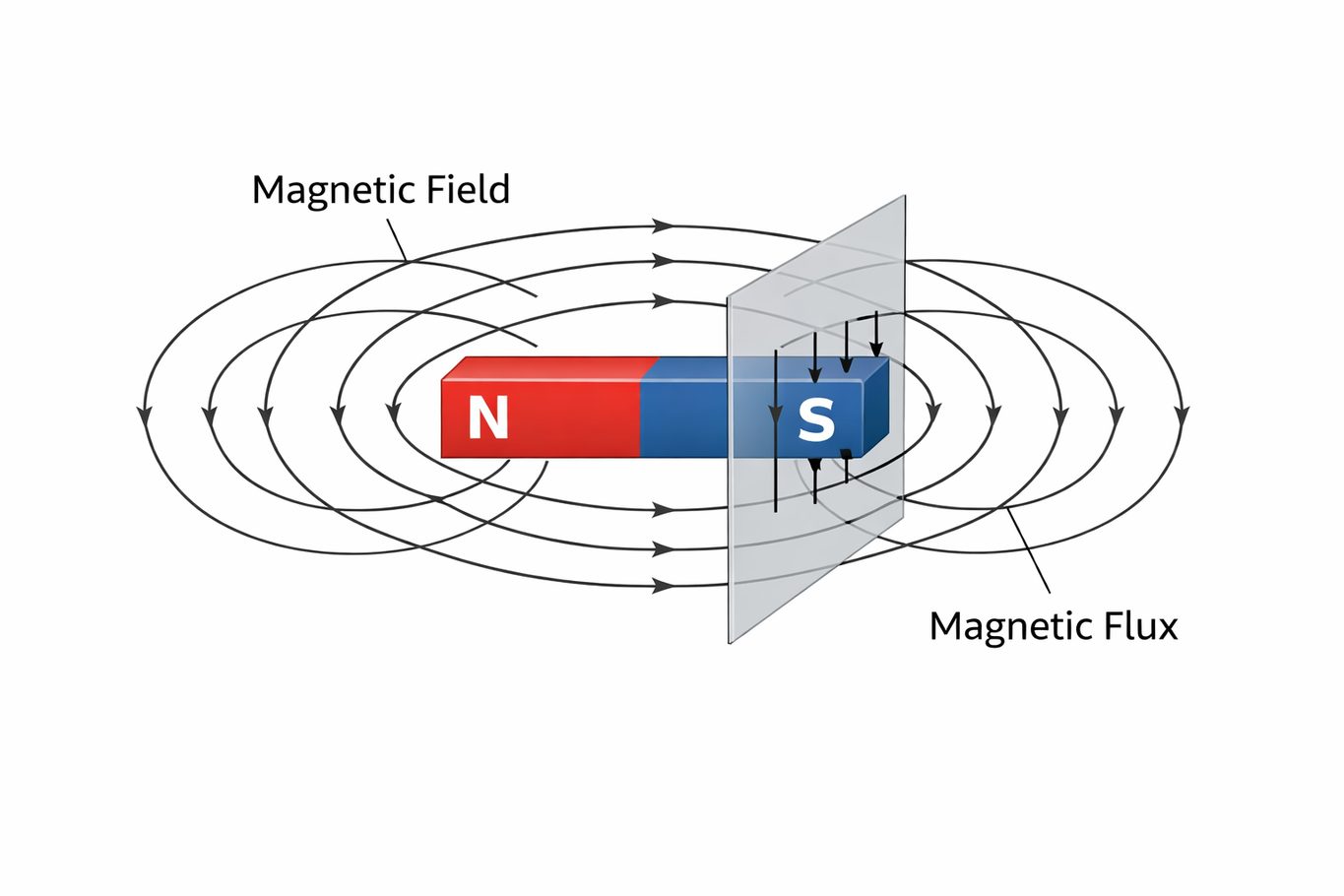
Difference Between Magnetic Field and Magnetic Flux
Magnetic field and magnetic flux are related, but they are not the same. A magnetic field describes magnetic influence in space, while magnetic flux describes how much of that field passes through a chosen surface. This difference is important in induction, coils, transformers, and other electrical systems.
Definitions, Symbols, and Units
Magnetic Field
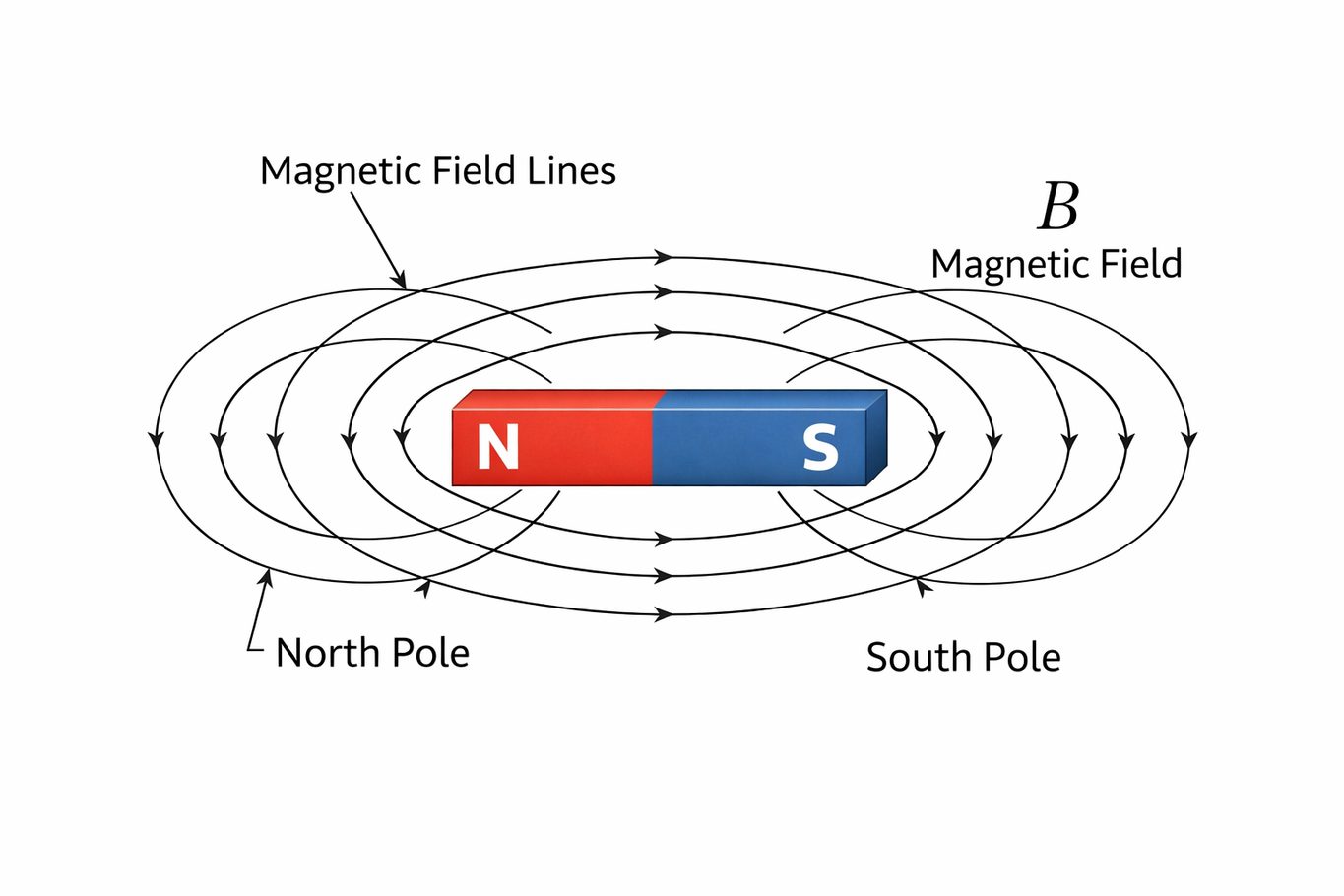
A magnetic field is the region around a magnet, electric current, or changing electric field where magnetic forces can act. It is represented by the symbol B and measured in tesla (T). Because it has both size and direction, it is a vector quantity.
The magnetic field shows the strength and direction of the magnetic effect at a certain point. It can exist around permanent magnets, current-carrying conductors, coils, and electromagnets.
Magnetic field lines are often used to show the field visually. They help represent direction and relative strength, but they are only a visual model, not real objects in space.
Magnetic Flux
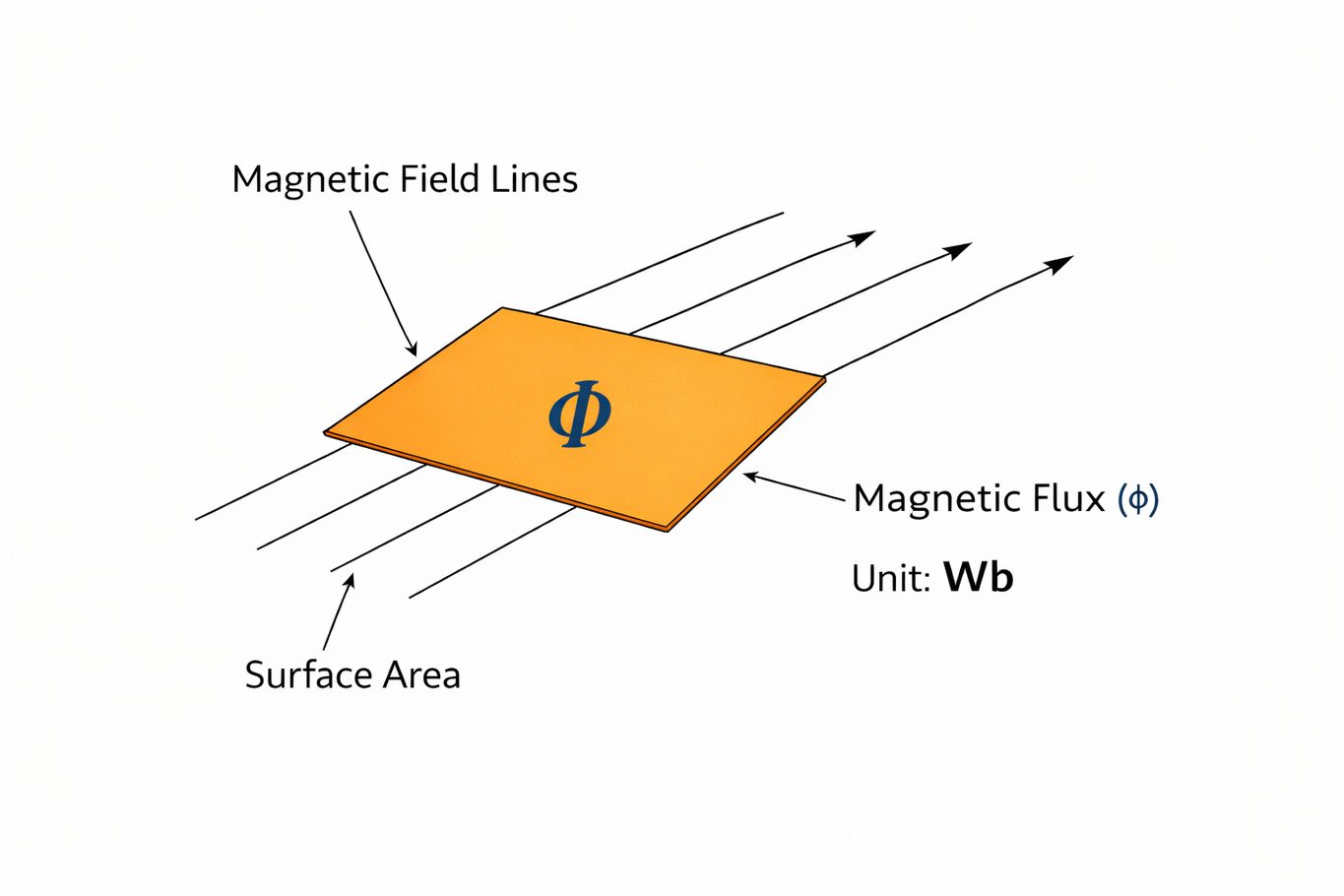
Magnetic flux is the amount of magnetic field passing through a chosen surface. It is commonly written as Φ or ΦB and measured in weber (Wb). Unlike a magnetic field, magnetic flux depends on both area and direction.
It does not describe the magnetic effect at every point in space. Instead, it shows how much of the magnetic field crosses a particular surface. This makes it required in coils, loops, transformer cores, and induction systems.
Unit Relationship
Magnetic field and magnetic flux are related by unit:
1 Wb = 1 T·m²
This means one weber of magnetic flux equals one tesla of magnetic field passing evenly through one square metre of area. This shows that the two quantities are closely connected, but they still describe different physical ideas.
| Quantity | Magnetic Field | Magnetic Flux |
|---|---|---|
| Symbol | B | Φ or ΦB |
| Unit | tesla (T) | weber (Wb) |
| Meaning | Magnetic influence at a point or in a region | Amount of magnetic field passing through a surface |
| Type | Vector quantity | Surface-related quantity |
Magnetic Flux Formula and Main Factors
Magnetic flux through a flat surface in a uniform magnetic field is calculated with this formula:
Φ = B A cos θ
Where:
• Φ = magnetic flux
• B = magnetic field strength
• A = surface area
• θ = angle between the magnetic field and the normal to the surface
This formula shows that magnetic flux does not depend only on magnetic field strength. It also depends on the size of the surface and the way the surface is positioned in the field.
Effect of Magnetic Field Strength
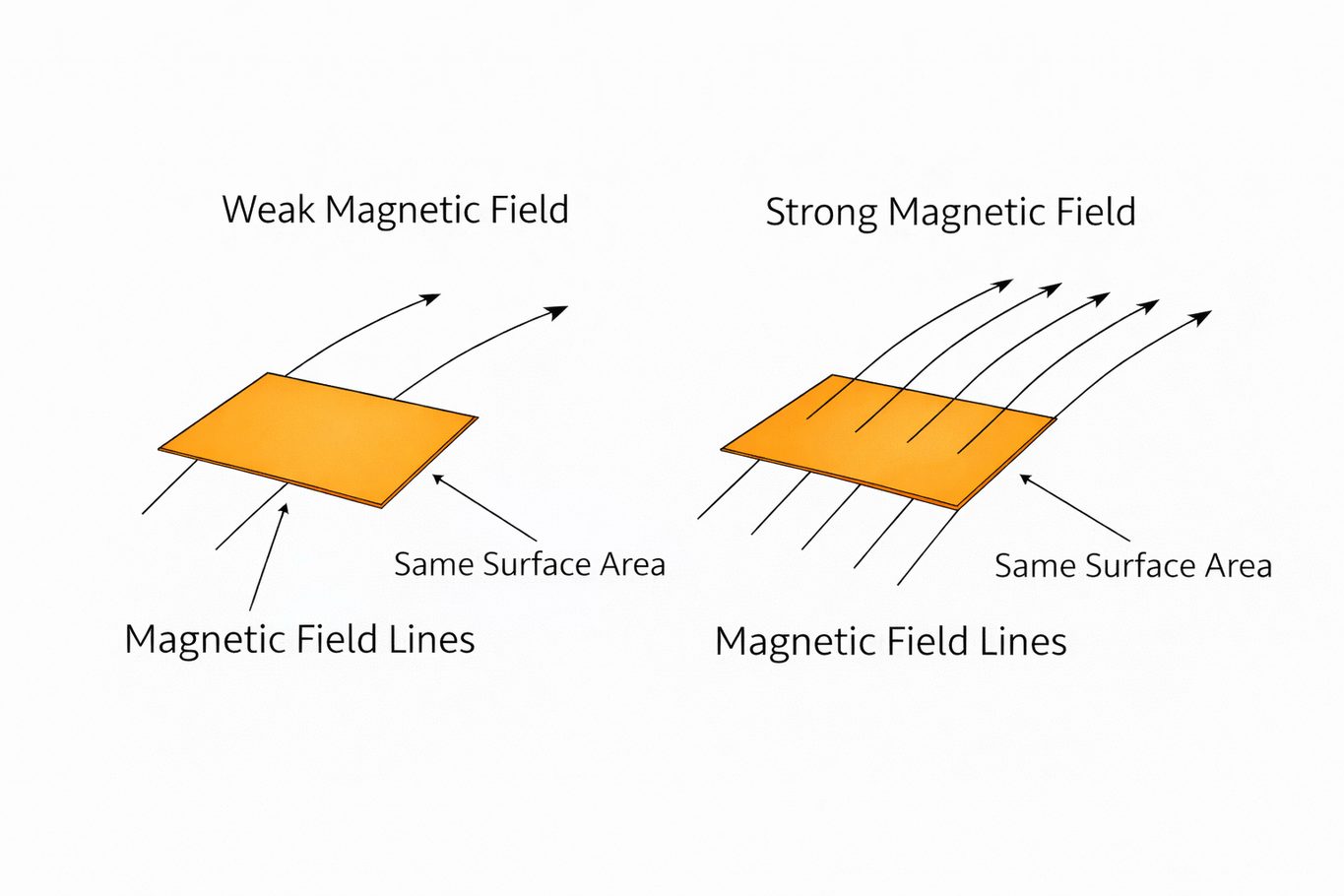
When the surface area and angle remain the same, magnetic flux increases as magnetic field strength increases. This happens because a stronger magnetic field passes more field through the same surface. If the magnetic field becomes weaker, the magnetic flux also becomes lower under the same conditions.
This factor shows that magnetic flux is directly linked to how strong the magnetic field is at the surface. Field strength alone does not fully determine the final amount of flux.
Effect of Surface Area
When the magnetic field strength and angle stay the same, the surface area has a direct effect on magnetic flux. A larger surface allows more of the magnetic field to pass through it, so the flux becomes greater. A smaller surface intercepts less of the field, so the flux is reduced.
This means magnetic flux depends not only on the field itself but also on the size of the surface being considered. Even in the same magnetic region, different surface sizes can produce different flux values.
Effect of Surface Orientation
The angle of the surface also changes the magnetic flux. Flux is greatest when the magnetic field passes straight through the surface. It becomes zero when the field runs parallel to the surface because the field does not pass through it.
This means surface position is important. Even a strong magnetic field can produce low flux if the surface is tilted at the wrong angle.
Relationship Between Magnetic Field and Magnetic Flux
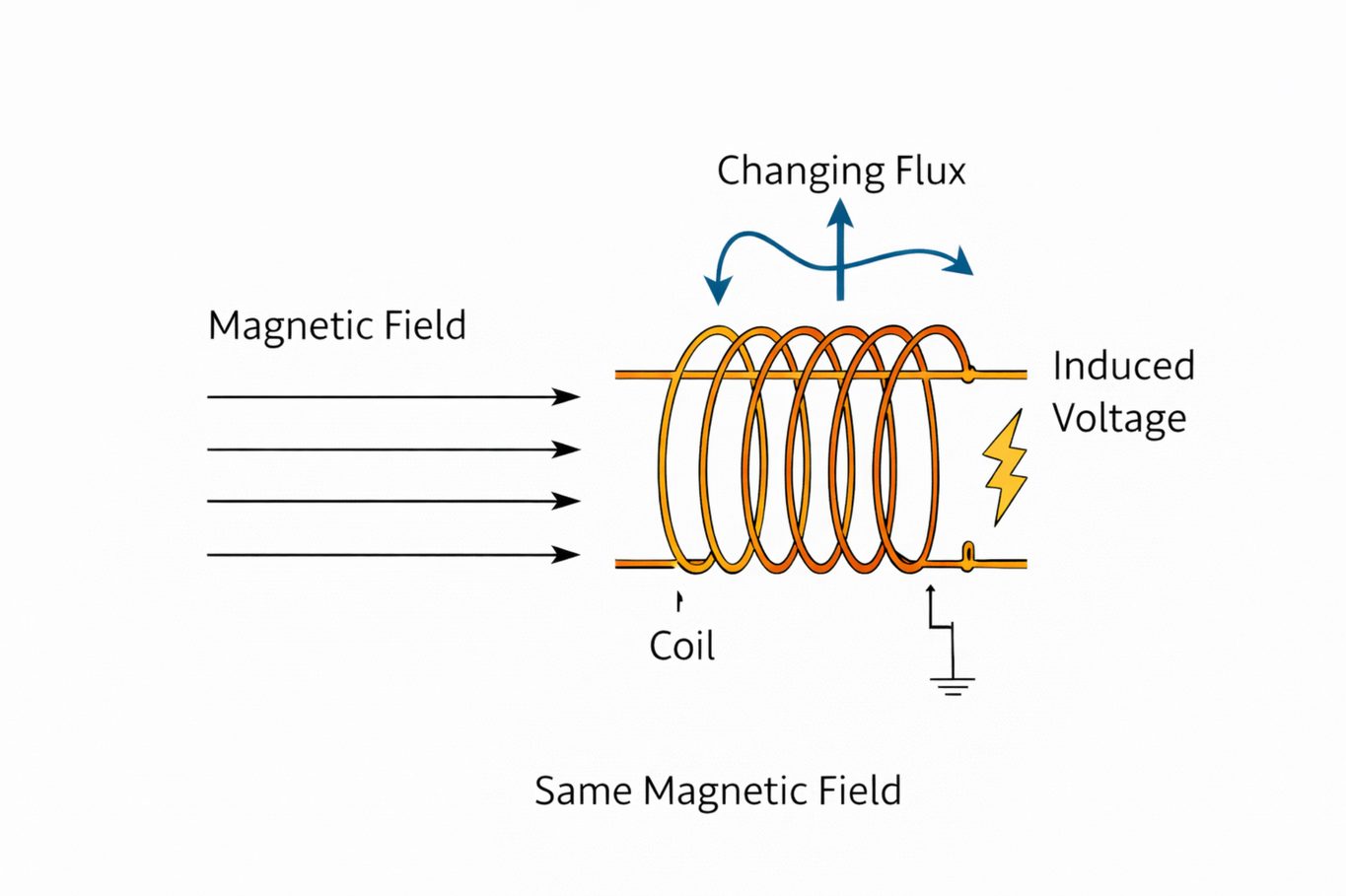
Magnetic flux comes from the magnetic field. If there is no magnetic field, there is no magnetic flux through a surface. The amount of flux depends on how the field passes through that surface, so the two ideas are connected but still different. A magnetic field creates the magnetic condition in space, while magnetic flux describes how much of that field crosses a chosen area or coil.
This relationship becomes especially important when magnetic flux changes over time. A changing magnetic flux can produce an electromotive force, which is the basic principle behind electromagnetic induction. This effect is fundamental in transformers, generators, and many other electrical systems.
Practical Uses of Magnetic Field and Magnetic Flux
Uses of Magnetic Field
Magnetic field matters most in systems where magnetic strength or direction at a point must be detected or controlled. Common examples include permanent magnets, electromagnets, magnetic sensors, speakers, MRI systems, and current-carrying conductors. In these cases, the main concern is the magnetic effect in space rather than the field passing through a defined surface.
Uses of Magnetic Flux
Magnetic flux matters most in systems where the amount of magnetic field through a loop, coil, or core affects operation. This includes transformers, generators, inductors, electric motors, and other induction-based devices. In these systems, magnetic flux is used to describe magnetic linkage, induction behavior, and how effectively magnetic energy passes through the intended path.
How to Analyze Magnetic Field and Magnetic Flux
Step 1: Identify the Main Quantity
Start by checking what the problem is asking for.
• If the question is about strength or direction in space, focus on the magnetic field
• If the question is about field passing through an area, coil, or loop, focus on magnetic flux
Step 2: Define the Region or Surface
Define exactly what part of the system is being studied. For a magnetic field, this may be a point, path, or region. For magnetic flux, identify the surface through which the field passes.
• Identify the surface
• Determine the area
• Mark the surface normal
• Note the magnetic field direction
Step 3: Check the Important Variables
Before solving the problem, list the main quantities involved.
• Magnetic field strength
• Uniform or non-uniform field
• Surface area
• Angle between the field and the normal
• Whether the flux changes with time
Step 4: Use the Correct Relationship
Use B when the goal is to describe magnetic influence at a point or across a region. Use Φ = B A cos θ when finding magnetic flux for a uniform magnetic field passing through a flat surface.
If the problem involves induction, check whether the magnetic flux changes because of:
• Changing field strength
• Changing area
• Changing orientation
• Motion of the conductor or surface
Mistakes to Avoid in Magnetic Field and Magnetic Flux
A common mistake is treating the magnetic field and the magnetic flux as if they are the same. They are connected, but they describe different things.
Another mistake is leaving out the surface when discussing magnetic flux. Flux depends on a defined area, so it cannot be understood clearly without one.
Angle is also often overlooked. Surface orientation changes how much magnetic field passes through it, so the same field can produce different flux values.
It is also required not to treat magnetic field lines as real objects. They are only a visual way to show direction and relative strength.
Conclusion
Magnetic field and magnetic flux work together, but they are not the same. Magnetic field describes the magnetic effect in space, while magnetic flux depends on field strength, surface area, and angle. These ideas are basic in induction and in devices such as transformers, generators, motors, and inductors. A clear understanding also helps avoid common mistakes when studying formulas, surfaces, and magnetic field lines.
Frequently Asked Questions [FAQ]
Can magnetic flux exist in a non-uniform field?
Yes. It can, but the simple formula works best for a uniform field.
Can magnetic flux be negative?
Yes. It depends on the field direction and surface orientation.
What is magnetic flux linkage?
It is the total flux through all coil turns.
Why use the surface normal?
It gives a clear reference for the angle.
Does flux need a real surface?
No. It can pass through an imaginary surface.
Why is flux important in AC systems?
Changing flux helps produce voltage.


