


Joules and watts are related, but they measure different things. Joules show the total amount of energy, while watts show how fast energy is used or transferred. Because these terms often appear together, they are easy to mix up. This article explains their meaning, their temporal connection, and how they appear in ratings, capacity, output, and runtime.
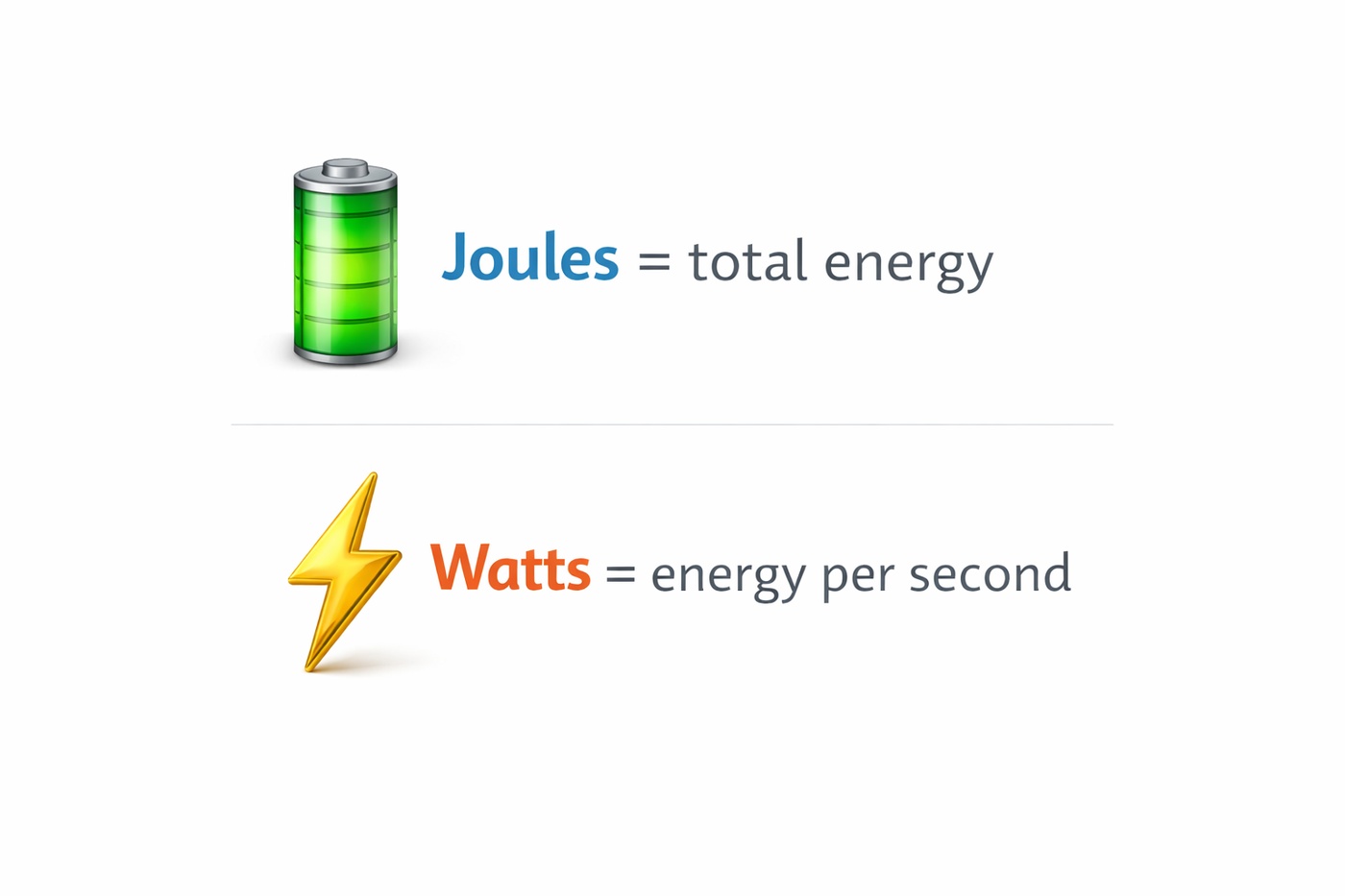
Energy and Power Measurement
Joules and watts are related, but they do not mean the same thing. A joule (J) measures energy. It shows the total amount of energy stored, transferred, or absorbed. A watt (W) measures power. It shows how quickly energy is used, delivered, or changed from one form to another.
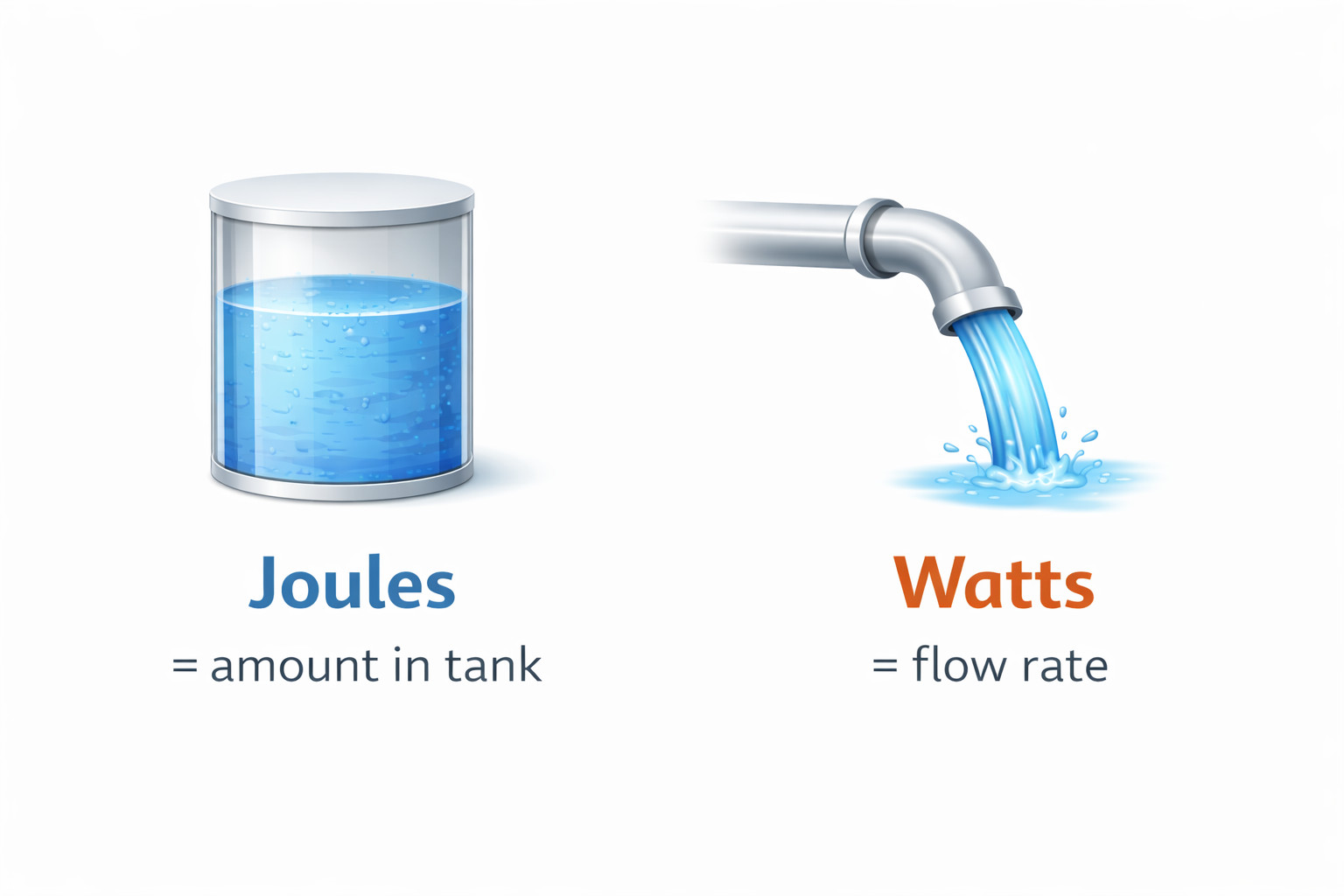
The Link Between Energy and Power
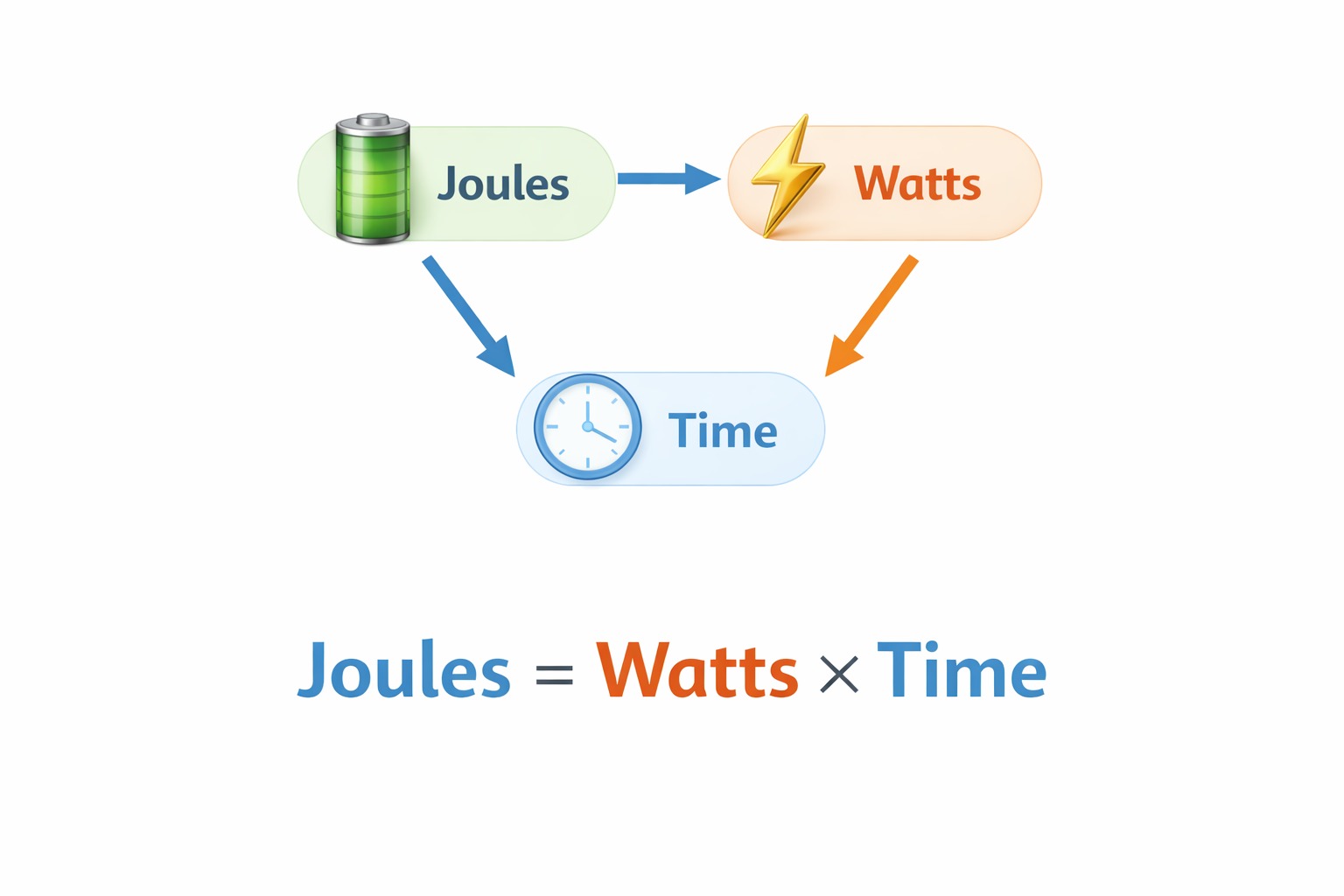
Joules and watts are related through time.
• Power (W) = Energy (J) ÷ Time (s)
• Energy (J) = Power (W) × Time (s)
• 1 watt = 1 joule per second
Joules and Watts in Product Ratings
Surge Protectors and Joules
Surge protectors are usually rated in joules because they are designed to absorb excess energy from sudden voltage spikes. The joule rating shows how much surge energy the product can handle before its protection weakens. A higher rating means greater protection capacity.
Appliances, Chargers, and Watts
Appliances, chargers, heaters, and many electronic products are rated in watts because watts show the amount of power used or delivered during operation. This rating shows the product's operating power level.
Batteries and Watt-Hours
Batteries are often labeled in watt-hours because this unit shows total stored energy in a form that is easier to read in product specifications. Product labels may also include watts to show output capability, which is separate from total energy capacity.
Using Joules and Watts in Product Decisions
Step 1: Identify the Measurement
Start by deciding what needs to be measured. Use joules or watt-hours when the goal is to express the total amount of energy, and use watts when the goal is to describe how quickly energy is used or delivered.
Step 2: Check Energy Capacity
If the product stores energy, check its total energy capacity first. This is often shown in watt-hours. A higher capacity means more stored energy, which allows longer operation when the output level is enough.
Step 3: Check Power Output
After that, compare the required watt level with the available watt output. A product may store a large amount of energy but still not operate properly if its power output is too low. This step helps separate total energy capacity from power delivery.
Step 4: Estimate Runtime
Runtime can be estimated by dividing energy capacity by power use. The basic formula is: Runtime (hours) = Battery capacity (Wh) ÷ Device power (W). This gives a general estimate, not an exact result, because actual runtime can be affected by energy losses, heat, system conditions, and battery state.
Common Joules and Watts Mistakes
One common mistake is treating joules and watts as if they mean the same thing. They do not. Joules measure total energy, while watts measure the rate at which energy is used.
Another mistake is assuming that a higher joule rating means a product is more powerful in every way. In some cases, it only means the product can handle a greater total amount of energy.
It is also a mistake to look only at battery capacity without checking watt output. A product may store enough energy overall but still not provide energy at the needed rate.
A final mistake is assuming that a higher watt rating always means something is better. Sometimes it only means energy is being used more quickly.
Comparison: Joules vs. Watts
| Feature | Joules | Watts |
|---|---|---|
| What it measures | Total energy | Rate of energy use or transfer |
| Main question it answers | How much energy? | How fast is energy being used? |
| Best used for | Stored energy, absorbed energy, and total energy transfer | Device demand, source output, and operating load |
| Common uses | Surge protectors and energy calculations | Appliances, chargers, and heaters |
| Relationship | J = W × s | W = J ÷ s |
Conclusion
Joules and watts do not mean the same thing, even though they are closely connected. Joules measure total energy, while watts measure the rate of energy use. This difference helps explain product ratings, battery capacity, output limits, and runtime estimates. When time is included, the relationship becomes clearer. Looking at both units in the right way helps prevent mistakes and keeps power information easier to understand.
Frequently Asked Questions [FAQ]
What is a watt-hour?
A watt-hour is a unit of energy. It shows how much energy is stored or used over time.
Why do batteries use watt-hours?
Batteries use watt-hours because this unit shows total stored energy clearly and practically.
Can high watts and high energy mean different things?
Yes. Watts measure power output or demand, while energy shows the total available energy.
Do higher watts always mean more electricity use?
Not always. Watts show the rate of energy use, but total energy use also depends on time.
Why does time matter between joules and watts?
Time matters because it connects total energy to the rate of energy use.
Why do some labels show both watt-hours and watts?
They show both because watt-hours measure stored energy, while watts measure power output or demand.


